The complete D&D session 0 guide
A complete D&D session 0 guide: what to cover, a ready checklist of questions, safety tools, and how to set expectations before your first session.
A D&D session 0 is the meeting you hold before the campaign begins to get everyone on the same page. You agree on what kind of story you’re telling, what’s off-limits, when you actually play, and who the characters are. It isn’t bureaucracy — it’s the single highest-leverage hour of prep you’ll ever do, because almost every campaign that falls apart does so over a misalignment that a session 0 would have caught. This guide walks through exactly what to cover, gives you a checklist of questions to ask, and shows you how to turn the discussion into a short agreement everyone can refer back to.
What a session 0 is and why it matters
Session 0 is a campaign’s foundation. Players arrive excited but with wildly different mental pictures of the game: one wants gritty survival, another wants heroic comedy, a third just wants to optimise a build. Left unspoken, those expectations collide three sessions in, usually at the worst moment.
The session 0 surfaces all of that before a single die is rolled. It costs you an hour or two and saves you the slow-motion campaign collapse that comes from unspoken assumptions. Even experienced groups benefit, because every table and every campaign is different.
You don’t need to make it formal or awkward. It’s a conversation, often over snacks, with a loose agenda. The agenda is the valuable part.
The campaign pitch and tone
Start by pitching your campaign in a few sentences. What’s the setting, the starting situation, and the kind of adventure you have in mind? Players can’t opt into a game they can’t picture.
Then nail down tone explicitly. Is this heroic or grim? Comedic or serious? Sandbox or guided story? How lethal — are character deaths likely, or are you running a more forgiving game? Tone disagreements are the quiet killer, because everyone assumes their preferred tone is the default.
Give players room to react. If three of them want a dungeon crawl and you pitched courtly intrigue, far better to learn that now than after you’ve prepped ten sessions of politics.
Content boundaries and safety tools
Every table has lines. Some players are fine with graphic horror; others have real-world topics they’d rather not encounter in a game meant to be fun. Session 0 is where you ask, plainly and without judgement, what’s off the table.
Lightweight safety tools make this easy. Lines and veils let players name hard “no” topics (lines) and topics that can happen off-screen (veils). Tools like the X-card give anyone a no-questions-asked way to pause if something lands badly mid-session. None of this constrains your creativity meaningfully — it just tells you which doors to leave closed.
Write the boundaries down. People forget verbal agreements, and “we discussed this in session 0” only works if you can point to it.
Scheduling, attendance, and table rules
The most common real reason campaigns die isn’t story — it’s scheduling. Settle it now. How often do you play, on what day, for how long? What’s the minimum number of players to run a session? What happens to an absent player’s character?
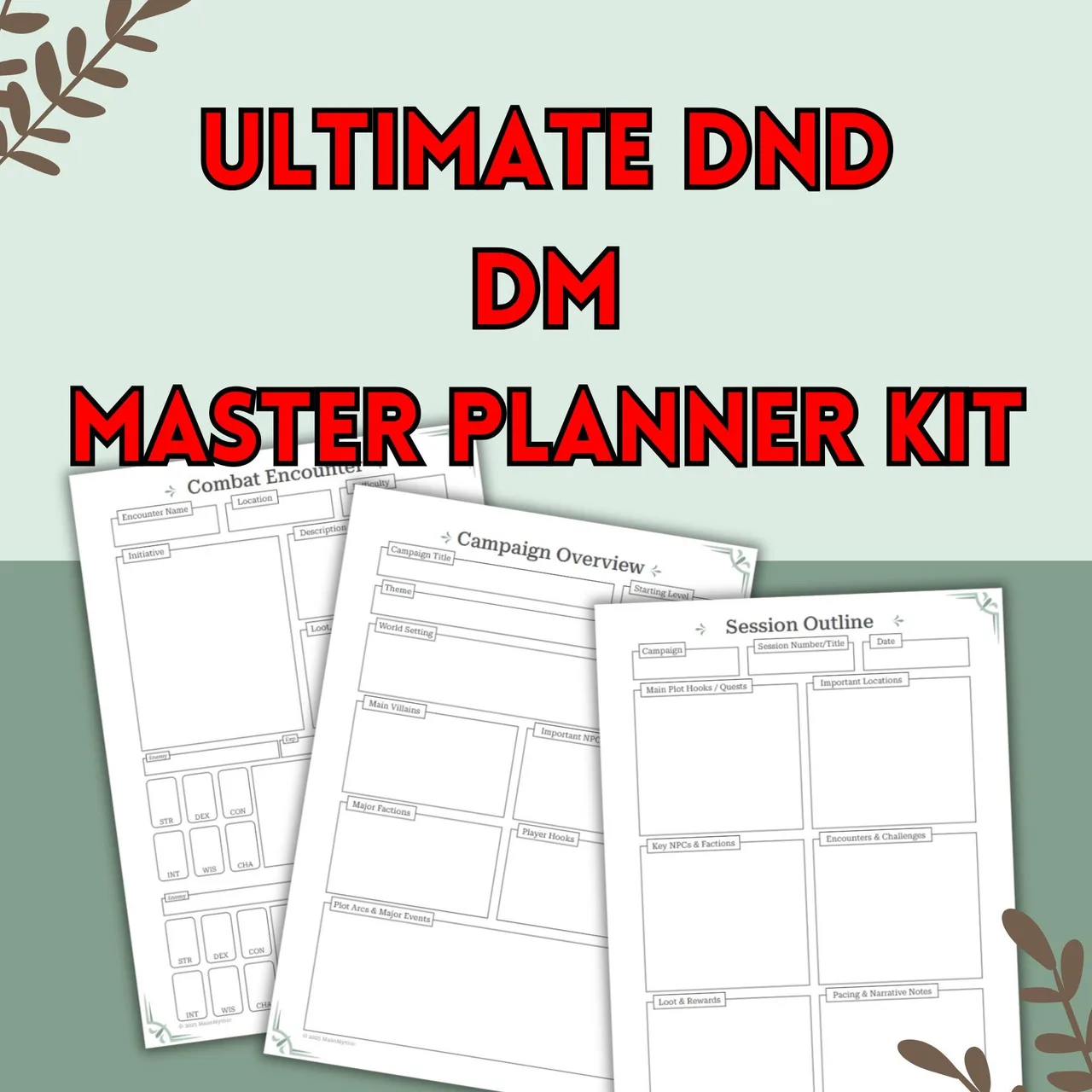
While you’re at it, agree on table logistics: phones, side talk, food, and how you’ll handle rules disputes mid-session (a good default: make a quick ruling now, look it up after). These tiny agreements prevent the friction that erodes a group over months. A simple shared tracker or planner keeps attendance and session notes in one place so nobody loses the thread between games.
Characters and party connections
Now the fun part: characters. Set guidelines first — starting level, allowed sources, stat generation method (standard array, point buy, or rolling), and any setting-specific restrictions. Getting this explicit avoids the awkward moment where one player rolled an 18 and another took the standard array.
Then handle the single most important question in any campaign: how do these people know each other? A party of strangers who “meet in a tavern” starts every campaign at a disadvantage. Spend ten minutes building one or two shared connections — old comrades, a debt, a shared hometown — and the party has a reason to stick together when the plot tests them.
This is also a good moment to talk party composition, not to force balance, but so nobody is surprised to be the only frontline fighter. If you’re onboarding new players, building characters together at the table is worth the extra time.
Turn the discussion into a one-page agreement
The mistake that wastes a good session 0 is not writing anything down. Memory drifts, and three months later nobody agrees on what was decided.
After the session, summarise the decisions in a short shared document: the pitch and tone, the content boundaries, the schedule, the house rules, and the party’s connections. It doesn’t need to be long — one page is plenty. The value is having a reference both you and your players can return to when something feels off.
That document is also your prep compass. The players told you, in their own words, what they want out of this game. Build toward those answers and you’re already running the campaign they actually signed up for.
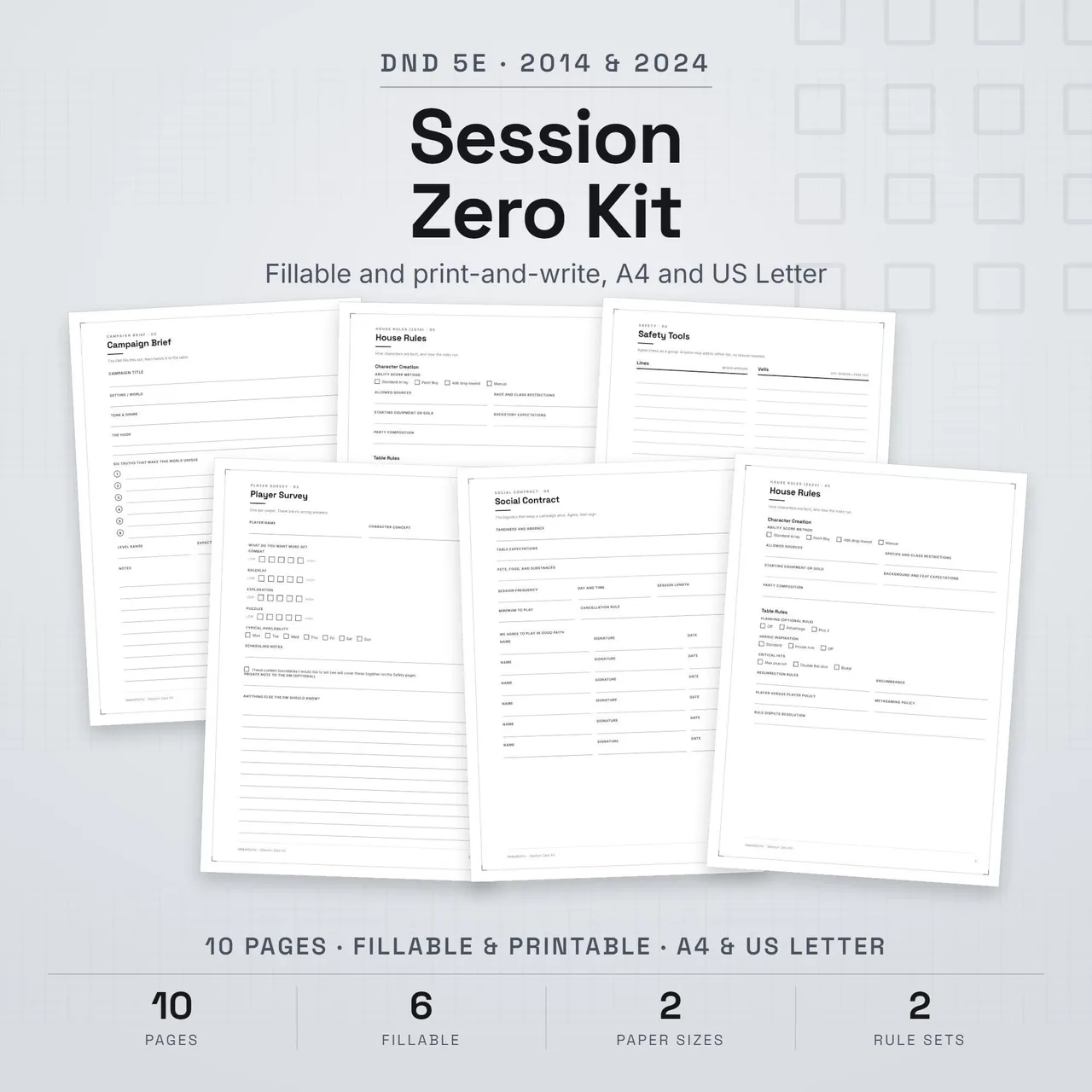
If you would rather not build that document from scratch, the session zero kit is the same agenda as prepared worksheets — tone and pitch, content boundaries, scheduling, house rules for both the 2014 and 2024 rulesets, and party connection prompts. Fillable for online tables, printable for in-person ones, and the filled sheets become the one-page agreement without a second write-up.
Run it once and never skip it again
Most DMs who try a proper session 0 never run a campaign without one again, because the difference is obvious from session 1. The party coheres faster, the tone lands, and the friction that used to surface mid-campaign simply doesn’t.
When you’re ready to turn those agreements into prep, our one-shot adventure tools help you assemble a strong opening session, and the NPC name generator keeps the cast straight from the first scene. Set the foundation well, and the rest of the campaign is built on solid ground.
Frequently asked questions
- What is a D&D session 0?
- Session 0 is a planning session held before the campaign begins, where the group agrees on tone, content boundaries, scheduling, house rules, and characters. It exists to get everyone aligned before play starts, which prevents most of the conflicts that derail campaigns later.
- What should you cover in a session 0?
- Cover the campaign pitch and tone, content and safety boundaries, scheduling and attendance, table house rules, character creation guidelines, and how the party knows each other. A short written summary afterwards keeps everyone honest as the campaign runs.
- How long does a session 0 take?
- Most session 0s run one to two hours. If you also build characters together at the table, budget three. It's time well spent, because an hour of alignment up front saves many hours of friction once the campaign is underway.
- Do you need a session 0 for a one-shot?
- A full session 0 is overkill for a one-shot, but a five-minute version still helps: agree on tone, content limits, and pregenerated characters. Even a single evening of play goes better when everyone knows what kind of game they signed up for.
- What questions should you ask players in session 0?
- Ask what kind of stories they enjoy, how much combat versus roleplay they want, any content they want to avoid, how their character connects to the others, and what would make a session feel like a win. Their answers become your prep priorities.
Keep reading
From the shop
Battlemaps, spell cards, and magic item cards, ready to print.
Browse MakeMythic on Etsy →