Pathfinder 2e for D&D players: making the switch
Curious about Pathfinder 2e after D&D 5e? What's different, what to expect, how hard the switch really is, and the character sheet that smooths the transition.
More 5e players are looking sideways at Pathfinder 2e than at any point in years, and it’s easy to see why: a stable, deeply customisable system with free online rules is an appealing place to land. If you’re a D&D player curious about making the jump, here’s an honest look at what changes, what doesn’t, and how to make the transition smooth.
The switch is real but short
Let’s be straight: PF2e has more rules to learn than 5e. Character building has more moving parts, the maths is tighter, and there are more modifiers to track. The first session or two will feel slower while everyone finds their footing.
But the underlying loop, roll d20, add modifiers, compare to a DC, is exactly what you already know. What’s different is the depth around it, not the foundation. Most groups describe the same arc: a bumpy first couple of sessions, then a moment where the system clicks and suddenly feels more consistent than what they left. The curve is steeper than 5e’s but it’s not long.
The three-action economy changes everything (for the better)
The single biggest difference, and the one 5e players notice first, is the three-action economy. Forget action, bonus action and move as separate buckets. In PF2e, each turn you get three actions, and you spend them on almost anything: move, strike, cast a spell, raise your shield, stand up, interact.
This is more flexible and more tactical than 5e’s rigid economy. Want to move, attack, and step back? You can. Attack three times, accepting a growing penalty? Also an option. It makes every turn a small decision rather than a fixed routine, and it’s the change most converts point to when they say PF2e “just feels better” to play.
The maths is tighter, especially at high level
5e is famously loose at high levels: bounded accuracy and swingy encounter maths mean a fight can flip on a couple of rolls, and building a challenging-but-fair encounter for a level 15 party is more art than science.
PF2e is the opposite. Its maths is tightly tuned, character power scales predictably, and the encounter-building rules give a DM a reliable read on how hard a fight will be before it starts. If you’ve ever had a 5e boss die in one round or nearly TPK the party by accident, PF2e’s precision is a genuine relief, and it’s one of the most common reasons experienced 5e DMs try the switch.
The rules are free
One practical thing that makes trying PF2e easy: the rules are free to read online. Paizo licenses the full ruleset, character options and most monsters, to reference sites, so you can build a character and run a game without buying a single book. That lowers the cost of experimenting to essentially zero, which is a big deal if you’re just testing the water. Plenty of players buy the books anyway to support the game and for the physical experience, but nothing stops you starting for free.
Smooth the transition with an automated sheet
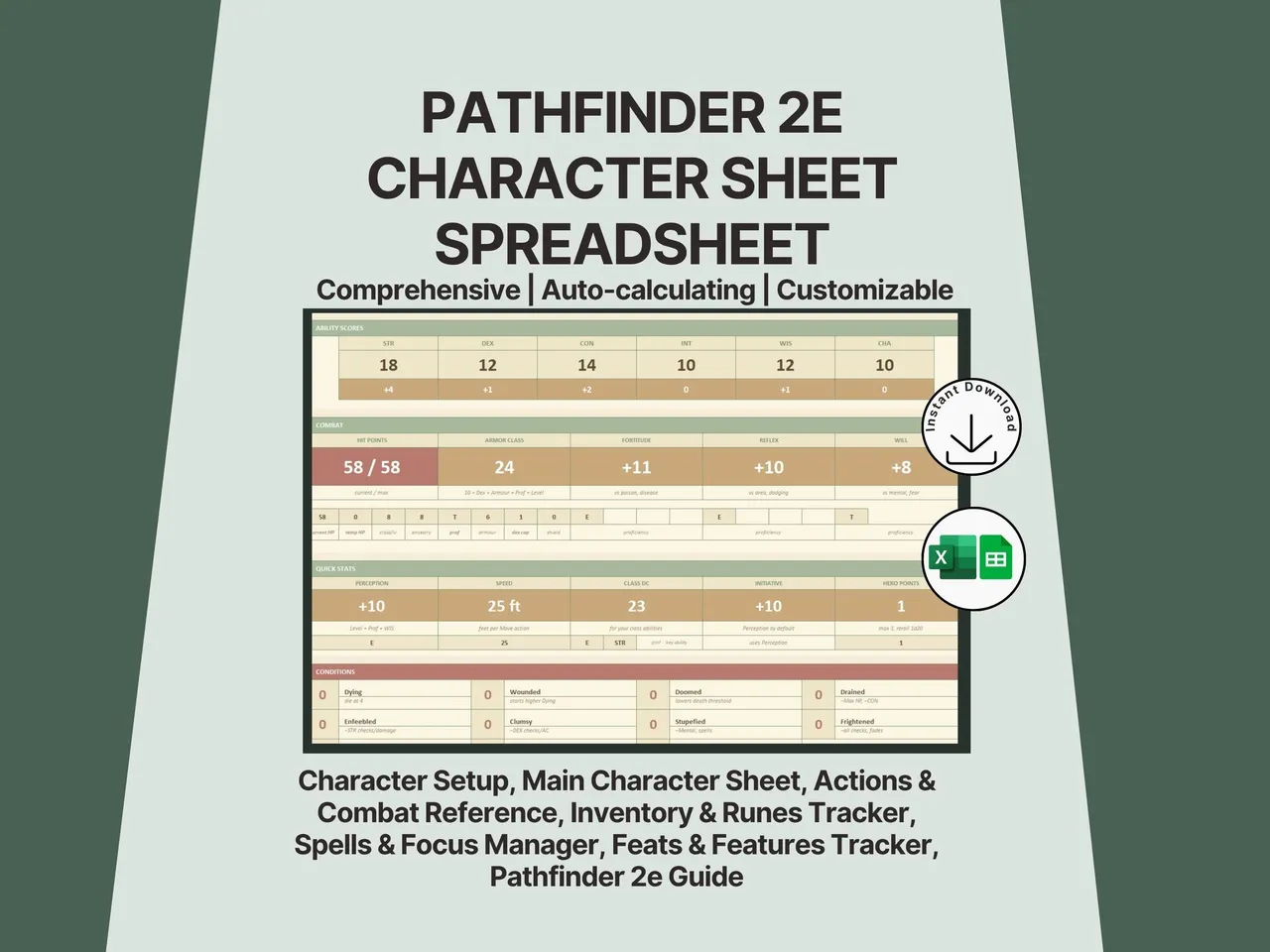
The one place the early learning curve bites is character maths. PF2e stacks proficiency, item and circumstance bonuses in ways that are logical once you know them but fiddly while you’re learning, and a hand-tracked sheet is where new players slip up.
An automated sheet takes that pain away. The Pathfinder 2e Character Sheet Spreadsheet ($32 $9.60) is built for the Remaster and does the maths for you, so your modifiers stay correct while you focus on learning how the system plays rather than where every number came from. It’s the kind of scaffolding that turns a bumpy first few sessions into a smooth landing.
Frequently asked questions
- How hard is it to switch from D&D 5e to Pathfinder 2e?
- There's more to learn upfront, PF2e has a three-action economy, more detailed character building and tighter maths, but the core loop is familiar to any 5e player. Most groups find the first session or two slower while the new patterns bed in, then the system clicks and plays smoothly. The learning curve is real but short.
- What's the biggest difference between PF2e and D&D 5e?
- The three-action economy. Instead of an action, bonus action and move, each turn gives you three flexible actions you can spend on almost anything: move, strike, cast, raise a shield. It makes turns more tactical and expressive, and it's the change 5e players notice first and tend to like most.
- Is Pathfinder 2e's rules content really free?
- The full rules, including character options and most monsters, are available free online through Paizo's licensed reference sites. You can build characters and run games without buying a book, which lowers the cost of trying the system, though many players still buy the core books to support it and for the table experience.
- Does Pathfinder 2e work better at high levels than 5e?
- Many players think so. PF2e's tighter maths and clearer scaling tend to hold up better at high levels, where 5e can become swingy. Encounter building is also more precise, so a DM can more reliably gauge how hard a fight will be, which is a common reason 5e DMs try the switch.
- Where can I get a Pathfinder 2e character sheet?
- MakeMythic on Etsy sells an automated Pathfinder 2e Remaster character sheet spreadsheet that handles the maths for you, which is a big help while you're still learning where PF2e's many modifiers come from.
Keep reading
From the shop
Battlemaps, spell cards, and magic item cards, ready to print.
Browse MakeMythic on Etsy →