Conditions are a core mechanical layer in D&D 5e. They represent temporary impairments or advantages applied by spells, monster abilities, environmental effects, and combat actions. Unlike hit point damage, conditions change what a creature can do rather than how much punishment it can absorb. A fully healthy creature under the Paralysed condition is functionally helpless; one with 1 HP and no conditions can still act.
Each condition has a precise, rules-legal definition. The 15 conditions in the core rules cover the full spectrum of combat impairment: sensory loss (Blinded, Deafened), movement restriction (Grappled, Restrained, Prone), action denial (Incapacitated, Stunned, Unconscious), and attack modification (Invisible, Frightened). Knowing each definition precisely is the difference between running a fight accurately and constantly interrupting play to look things up.
The most punishing condition combinations
Conditions compound. A creature that is both Restrained and Poisoned has disadvantage on its attack rolls twice, but in 5e, multiple sources of disadvantage do not stack; one instance cancels one instance of advantage and vice versa. However, a creature that is Stunned (attack rolls against it have advantage) and an attacker who is Invisible (also grants advantage) does stack: the attacker rolls with advantage and the defender is automatically failed on Strength and Dexterity saves.
Paralysed and Unconscious are the most devastating single conditions because they both enable critical hits on any hit within 5 feet, meaning every attack from an adjacent creature automatically deals maximum die results. Combined with the incapacitation and automatic save failures, a Paralysed creature can be reduced to 0 HP in a single turn by a group of attackers even if it was at full health.
For DMs: apply Prone to knocked-down creatures before melee attacks resolve. It gives melee attackers advantage while penalising ranged attackers, a situationally correct simulation of a target on the ground.
Using condition cards at the table
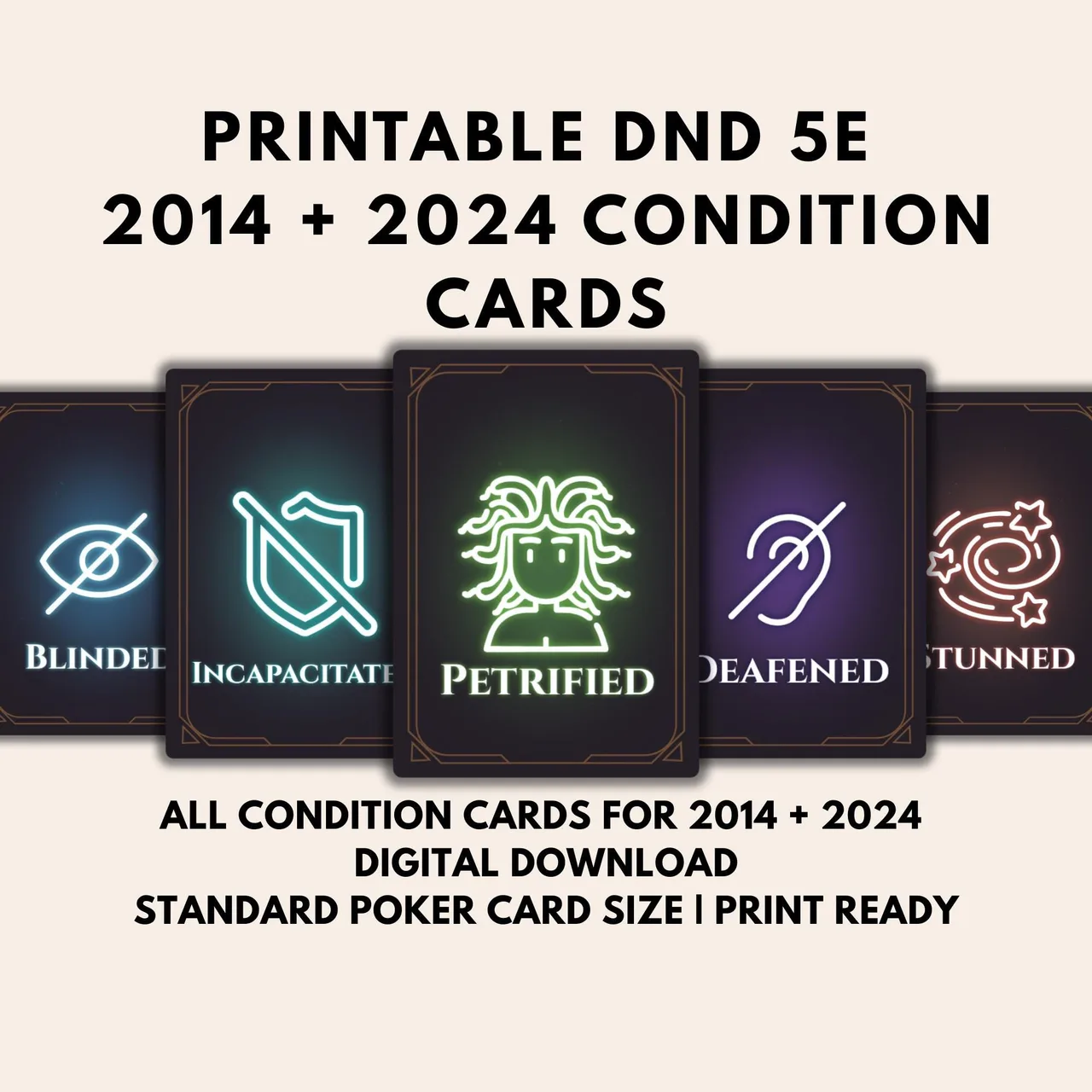
The most common failure mode in live combat is forgetting active conditions. A player who forgot their character is Frightened will move toward the source of fear. A DM who forgot the Restrained ogre's attack disadvantage will roll without it. Physical condition cards placed in front of the affected player or adjacent to the miniature eliminate this problem entirely. The card is visible, tangible, and unambiguous.
Printable condition cards pair with this reference: use this page to find the right condition quickly during prep or a rules dispute, then hand the physical card to your player for the duration of the encounter. The MakeMythic condition cards cover both the 2014 and 2024 ruleset editions, so they work regardless of which rules version your table uses.