The D&D Battlemap Locations Every Campaign Needs
The battlemap locations every D&D campaign reuses: taverns, forests, dungeons, roads, throne rooms and more — what each is for and why to have them ready.
After enough sessions you notice something: you don’t actually need hundreds of unique maps, you need the right dozen locations reused with variation. The party returns to taverns constantly, travels the same kinds of roads, and delves the same kinds of dungeons. Knowing which locations recur lets you prep the high-use ones once and stop scrambling. Here’s the core set every campaign leans on.
The everyday locations
Taverns and inns
The single highest-use map in D&D. Parties meet in taverns, regroup in them, gather rumours, hire on, and start adventures from them — and when a social scene turns ugly, the same map becomes a brawl arena. If you own one map, own a good tavern. Taking a calmer first session in a tavern is also a classic way to ease new players in before the dice get dangerous.
Roads and wilderness trails
Travel happens, and ambushes happen on travel. A road or trail map covers random encounters, planned ambushes, and the connective tissue between destinations. Pair it with a travel and weather generator to make the journey feel like more than a loading screen.
Forests
The default wilderness. Parties cross forests on the way to almost everywhere, and the dense cover makes for genuinely tactical fights — sightlines matter, terrain matters, and a grid overlay keeps the movement honest. A forest is also the natural home of the first “something’s out here with us” encounter.
Dungeons and caves
The genre’s namesake. Every campaign delves eventually, whether it’s a goblin warren at level one or a sprawling complex later. Dungeon maps get the most combat use of any location, so having several layouts stops every delve looking identical. Our random dungeon generator helps when you need a fresh layout fast.
Town squares and streets
Once the party has a base of operations, urban scenes multiply: market chases, street confrontations, festival scenes, and the politics of who runs the place. A town map turns “you’re in the city” into something the party can navigate.
The set-piece locations
As the campaign climbs, the location mix shifts toward bigger, more dramatic spaces.
Throne rooms and great halls
The natural home of audiences with rulers, climactic confrontations, and the seat of power. A grand interior signals stakes the moment you put it down — players read a throne room and know this scene matters.
Fortresses, keeps, and temples
Mid-to-high-level play involves assaulting or defending strongholds. These maps support the multi-room, multi-objective fights that define a campaign’s bigger moments.
Planar and exotic landscapes
High-level parties leave the material plane. Arcane battlefields, elemental wastes, and otherworldly terrain become relevant — especially in a high-magic campaign like the Season of Magic is built for.
How the mix changes by tier
A rough guide to what you’ll actually use:
| Tier | Heaviest-use locations |
|---|---|
| Levels 1–4 | Tavern, forest, road, small dungeon |
| Levels 5–10 | Town, larger dungeon, keep, temple |
| Levels 11+ | Throne room, fortress, planar, set-piece |
You never stop needing the everyday locations — you just add the dramatic ones on top.
Why a library beats one-off maps
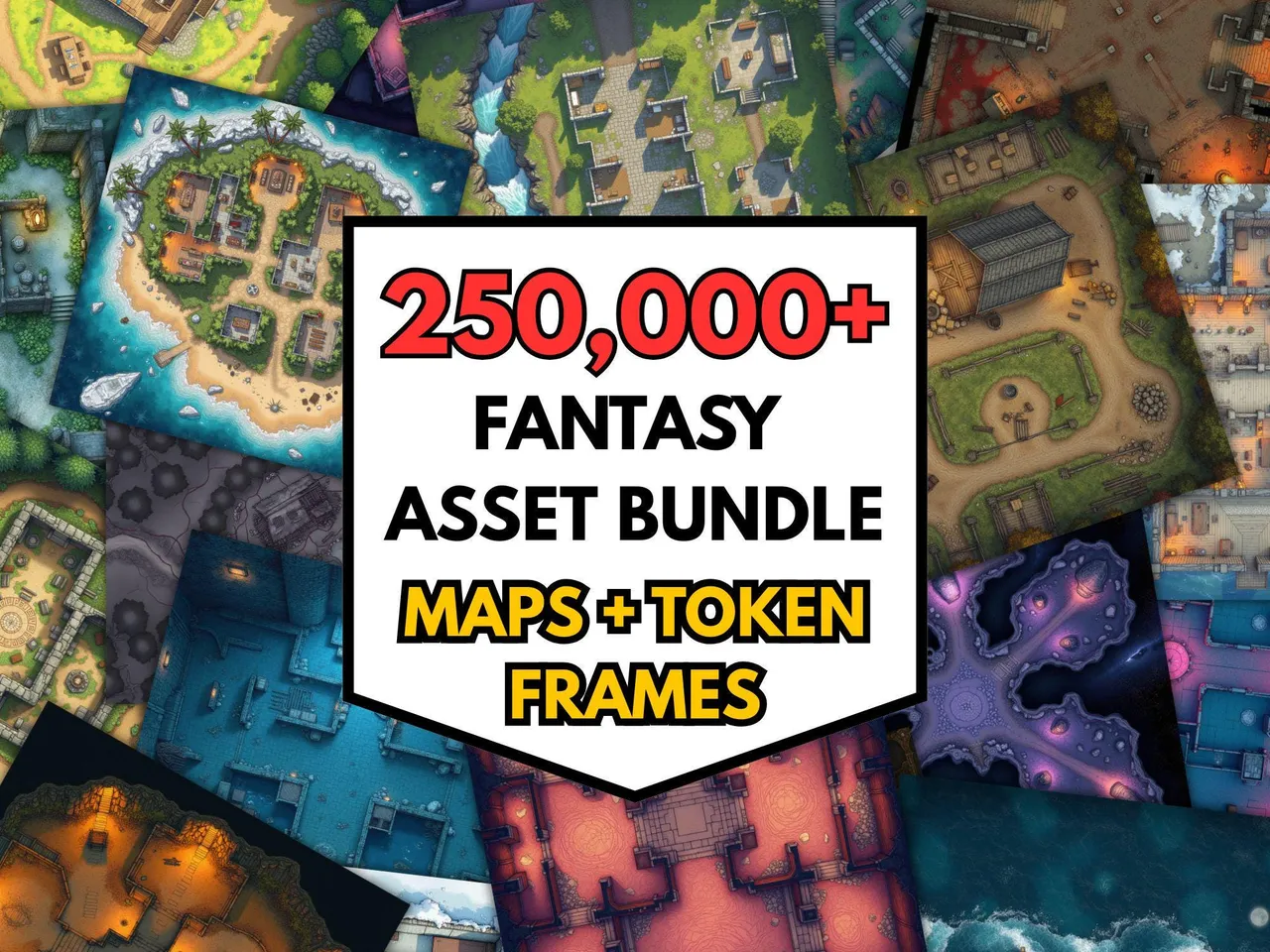
Here’s the practical takeaway: because campaigns reuse a core set, the most valuable thing isn’t a single gorgeous custom map — it’s coverage. The session where you needed a riverside mill, a back-alley, or an ice cave and didn’t have one is the session that stalls. A broad library means whatever the party walks into, you already own the map.
Build your core set first
If you’re starting out, don’t try to collect everything — get the everyday five (tavern, road, forest, dungeon, town) and one grand interior, and you’ll be covered for most of a campaign. Then read how to use a battlemap as a new DM to run them smoothly, and how big a battlemap should be to get the scale right on whatever you display them on.
Frequently asked questions
- What battlemaps does every D&D campaign need?
- The reliably reused locations are a tavern or inn, a road or wilderness trail, a forest, a dungeon or cave, a town square or street, and a grand interior like a throne room or great hall. These cover the overwhelming majority of scenes across almost any campaign, so having them ready saves the most prep time.
- Why is a tavern map so useful?
- Taverns are where parties meet, regroup, gather rumours, and start adventures, so they recur constantly across a campaign. A tavern map also doubles as a brawl arena when a social scene turns violent, making it one of the highest-use maps a DM can own.
- What maps do beginner DMs need first?
- Start with a tavern, a forest or road, and a simple dungeon. These three cover a first session's meeting scene, the journey out, and the first delve, which is the arc most early campaigns follow. Add town and grand-interior maps as the party grows in level and influence.
- How many battlemaps does a DM actually use?
- Most campaigns lean on a core set of around a dozen location types reused with variation, far more than they use one-off custom maps. That's why a broad library of common locations is more valuable to most DMs than a handful of bespoke set-piece maps.
- Do I need different maps as the party levels up?
- Yes. Early play favours taverns, forests, and small dungeons, while higher levels shift toward throne rooms, planar landscapes, fortresses, and large set-pieces as the stakes and locations scale up. A good library covers both ends so you're not caught short mid-campaign.
- Where can I get all these battlemap locations at once?
- Large battlemap bundles collect the common location types — taverns, forests, dungeons, roads, towns, and grand interiors — in one purchase, which is far cheaper per map than buying single scenes and means you already own whatever the session needs.
Keep reading
From the shop
Battlemaps, spell cards, and magic item cards, ready to print.
Browse MakeMythic on Etsy →