How the frightened condition works in D&D 2024
A clear guide to the frightened condition in D&D 2024: what it does, what causes it, how it ends, what changed from 2014, and how DMs should use it.
The frightened condition is one of the most common ways D&D models fear, and it shows up everywhere from a dragon’s roar to the spell Fear to a haunted crypt. In the 2024 rules it does two things: it imposes disadvantage on the creature’s attack rolls and ability checks while it can see the source of its fear, and it stops the creature from willingly moving closer to that source. That’s the whole mechanical core. This guide breaks down exactly what it affects, what doesn’t, what causes it, how it ends, and how to use it well as a DM without grinding the game to a halt.
What the frightened condition does
Per the 2024 ruleset, a frightened creature suffers two effects:
- Disadvantage on ability checks and attack rolls while the source of its fear is within line of sight.
- It can’t willingly move closer to the source of its fear.
Note the precise scope. The disadvantage applies to attack rolls and ability checks. It does not apply to saving throws — a frightened creature still rolls its saves normally. Its damage, its spell save DCs, and its access to bonus actions and reactions are all untouched. Frightened makes a creature worse at hitting and acting, not helpless.
The “while the source is within line of sight” clause is the part DMs most often forget. The disadvantage switches off the moment the creature can’t see what scared it. Break line of sight — a wall, a closed door, total darkness — and a frightened creature acts normally again, even though it’s still technically frightened and still can’t advance on the source.
What causes the frightened condition
Frightened is a building block that many abilities and spells apply. Common sources include:
- Frightful Presence, the recharge ability on many dragons and large monsters, which frightens creatures that fail a Wisdom save within a radius.
- The Fear spell, which frightens creatures in a cone and, notably, also forces them to use their movement to flee — an extra clause on top of the base condition.
- Class and subclass features, such as effects that frighten a creature you hit.
- DM-adjudicated horror, where you rule that a sufficiently dreadful sight calls for a save against being frightened.
Because the condition is referenced by so many different effects, always read the specific source for extra clauses. The base condition and what an individual spell layers on top of it are two different things.
How the frightened condition ends
There is no single universal end-trigger — it depends on what applied it. The three common patterns:
- Repeat saving throw. Many effects let the creature repeat the save at the end of each of its turns, ending the condition on a success. Frightful Presence works this way.
- Fixed duration. Some effects last a set time or require concentration, ending when the timer runs out or concentration drops.
- Loss of line of sight. A few effects end the condition once the creature can no longer see the source.
When you apply frightened at the table, state up front how it ends. “Make a Wisdom save at the end of your turns to shake it off” keeps play moving and stops the condition from feeling arbitrary.
What changed from 2014 to 2024?
Very little, which is good news if you already knew the old version. The 2024 frightened condition keeps the same two core effects — disadvantage on attacks and ability checks while the source is visible, and no willing movement toward it. The 2024 books reorganised all the conditions into a cleaner, consistent appendix, but frightened’s actual rules text is effectively unchanged from 2014.
The practical upshot: tables mixing 2014 and 2024 material can use frightened without worrying about a rules mismatch. It behaves the same across both.
How to use frightened as a DM
The biggest mistake with frightened is overusing it. If every other monster frightens the party, it becomes background noise and players stop reacting. Treat it as a signal: the moment something frightens the party, it tells them this threat is in a different category. Save it for the true monster, the reveal, the boss — and it carries real weight.
A few tips for clean play:
- Narrate it, don’t just announce it. “You feel your hands shake — disadvantage while you can see it” lands better than “you’re frightened.”
- Use line of sight tactically. Frightened encourages players to break sight lines and reposition, which creates interesting movement instead of a static slugfest.
- Keep the reference handy. Conditions are where rules debates stall a tense scene. A quick lookup keeps the dread intact.
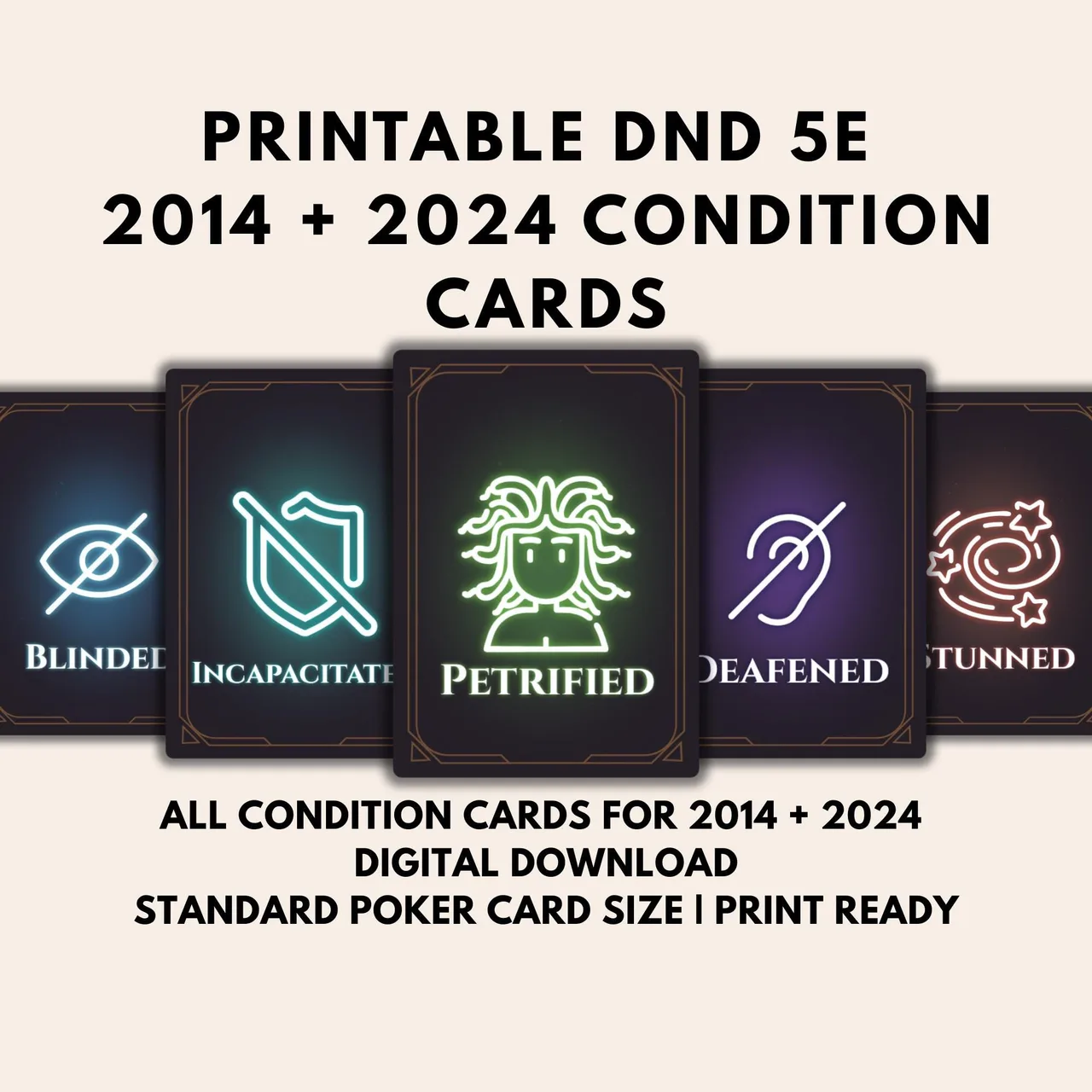
This makes frightened a near-perfect tool for horror sessions, where one well-timed fear effect does more than any amount of description. If you’re building toward that, see how to run a D&D horror one-shot and our horror one-shot ideas for places to deploy it. A printed condition reference at the table means you never break the moment to argue about wording.
The short version
Frightened means disadvantage on attacks and ability checks while the fear source is visible, plus no willing movement toward it — and nothing else. It doesn’t touch saving throws, damage, or reactions. It barely changed in 2024. Used sparingly, it’s one of the sharpest tools you have for telling players, without a word, that they should be afraid.
Frequently asked questions
- What does the frightened condition do in D&D 2024?
- A frightened creature has disadvantage on ability checks and attack rolls while the source of its fear is within line of sight. It also can't willingly move closer to that source. Other actions, bonus actions, and reactions still work normally.
- Did the frightened condition change in the 2024 rules?
- Not substantially. The 2024 wording is nearly identical to 2014: disadvantage on attacks and ability checks while the fear source is visible, and no willing movement toward it. The 2024 rules tidied the conditions into a consistent appendix but kept frightened's effects the same.
- Does frightened stop a creature from moving?
- No, it only stops a creature from willingly moving closer to the source of its fear. A frightened creature can still move away, move sideways, or stay put. Forced movement, like being shoved, can still push it toward the source.
- Is there a saving throw to end the frightened condition?
- It depends on the effect that caused it. Many fear effects let the target repeat a saving throw at the end of each of its turns to end the condition. Others end when line of sight to the source is broken, or after a set duration. Always check the specific spell or ability.
- What's the difference between frightened and other fear effects?
- Frightened is the formal game condition with defined rules. Effects like a dragon's Frightful Presence or the spell Fear apply the frightened condition, sometimes with extra clauses such as forcing the creature to flee. The condition is the building block those abilities reference.
Keep reading
From the shop
Battlemaps, spell cards, and magic item cards, ready to print.
Browse MakeMythic on Etsy →