How to run a D&D horror one-shot
Run a D&D horror one-shot that actually scares your table: pick a subgenre, build dread, use the frightened condition, and steal a ready-made skeleton.
A D&D horror one-shot works when you stop running D&D the way you normally do. Your usual game rewards clever players with control: they out-damage the threat, they rest to full, they win. Horror needs the opposite. It needs characters who are low on slots, cut off from help, and facing something they can’t simply kill. The good news is that a one-shot is the ideal container for this, because you can break the comfortable rhythm of a campaign for a single night without consequences. Here’s how to build dread, pick the right kind of horror, and run a session your table still talks about months later.
Why D&D fights you when you try to make it scary
The default state of a D&D party is powerful and safe. Four to six heroes, full hit points, a stack of spell slots, and the shared knowledge that the DM probably won’t just kill them. Every one of those facts is the enemy of fear.
So the first job isn’t adding scary monsters. It’s removing safety. Strip the party down to a smaller group if you can, three players instead of five. Start them already wounded, or several hours into a journey with resources spent. Cut off the easy exits: a collapsed bridge, a storm, a locked gate behind them. The moment players feel they can’t simply leave or out-muscle the problem, the room changes.
The second job is to make the threat the wrong shape for their character sheets. A pile of hit points is a puzzle they know how to solve. A curse that spreads, a thing that wears a friend’s face, a countdown they can’t see — those have no obvious “I attack it” answer, and that uncertainty is where dread lives.
Pick one kind of horror and commit
The most common mistake is blending every horror flavour into a soup. Pick one and lean all the way in. The big four that suit D&D:
Gothic horror. Crypts, curses, decaying nobility, a single looming villain like a vampire or a lich. This is the easiest to run because 5e already has the monsters and the trappings. If you’re prepping for Ravenloft: The Horrors Within or just want a classic haunted-castle night, start here.
Folk horror. An isolated village with a terrible secret. The horror is the community itself: the too-friendly innkeeper, the festival nobody will explain, the ritual the party is unknowingly part of. No big monster needed, just wrongness that compounds.
Cosmic or eldritch horror. Something vast and uncaring that the characters cannot meaningfully fight. The fear is scale and insignificance. This is the hardest to land because it fights D&D’s power fantasy directly, so use it when your table is up for a downbeat ending.
Body horror. Transformation, infection, things growing where they shouldn’t. Pairs brutally well with a ticking clock: one character was bitten, and the party can feel the timer running.
One subgenre, chosen deliberately, beats three stitched together every time.
Structure the night for dread
A horror one-shot has a different shape from a normal adventure. Think in three movements across your three to four hours.
The unease (first 45–60 minutes). Nothing overtly attacks. Small wrongnesses accumulate: a smell, a sound, a villager who won’t make eye contact. Let players investigate and let them feel clever — you’re loading the spring. Resist the urge to reveal the monster.
The escalation (the long middle). Now things go wrong in ways players can’t undo. The exit closes. The first death happens, ideally an NPC they liked. Resources start to bite. This is where you split the party if your group can handle it, because isolation multiplies fear.
The reckoning (final hour). The truth lands and the party acts on it, win or lose. Horror tolerates a bittersweet or costly ending far better than a normal adventure does. Someone paying a price is often the most memorable beat of the night.
A free one-shot adventure outline can give you the bones of this if you’re short on prep time, and a random dungeon layout is a fast way to get a claustrophobic crypt or asylum on the table.
The mechanics that actually generate fear
Atmosphere sets the mood, but mechanics make players believe the danger. A few that reliably work:
The frightened condition, used rarely. When something is so dreadful that looking at it gives disadvantage on attacks and checks, players notice. The trick is scarcity. If everything causes fear, nothing does. Save it for the moment the true threat appears, and it carries real weight.
Resource starvation. Block the long rest. A haunted house that won’t let you sleep, or a ritual that must be stopped before dawn, turns every spell slot and hit die into a hard decision. Track the squeeze openly with a spell-slot tracker so players feel the tank emptying.
The ticking clock. A visible or implied countdown — the infection spreads at dawn, the ritual completes in an hour — converts dread into pressure. Pressure makes players make mistakes, and mistakes make horror.
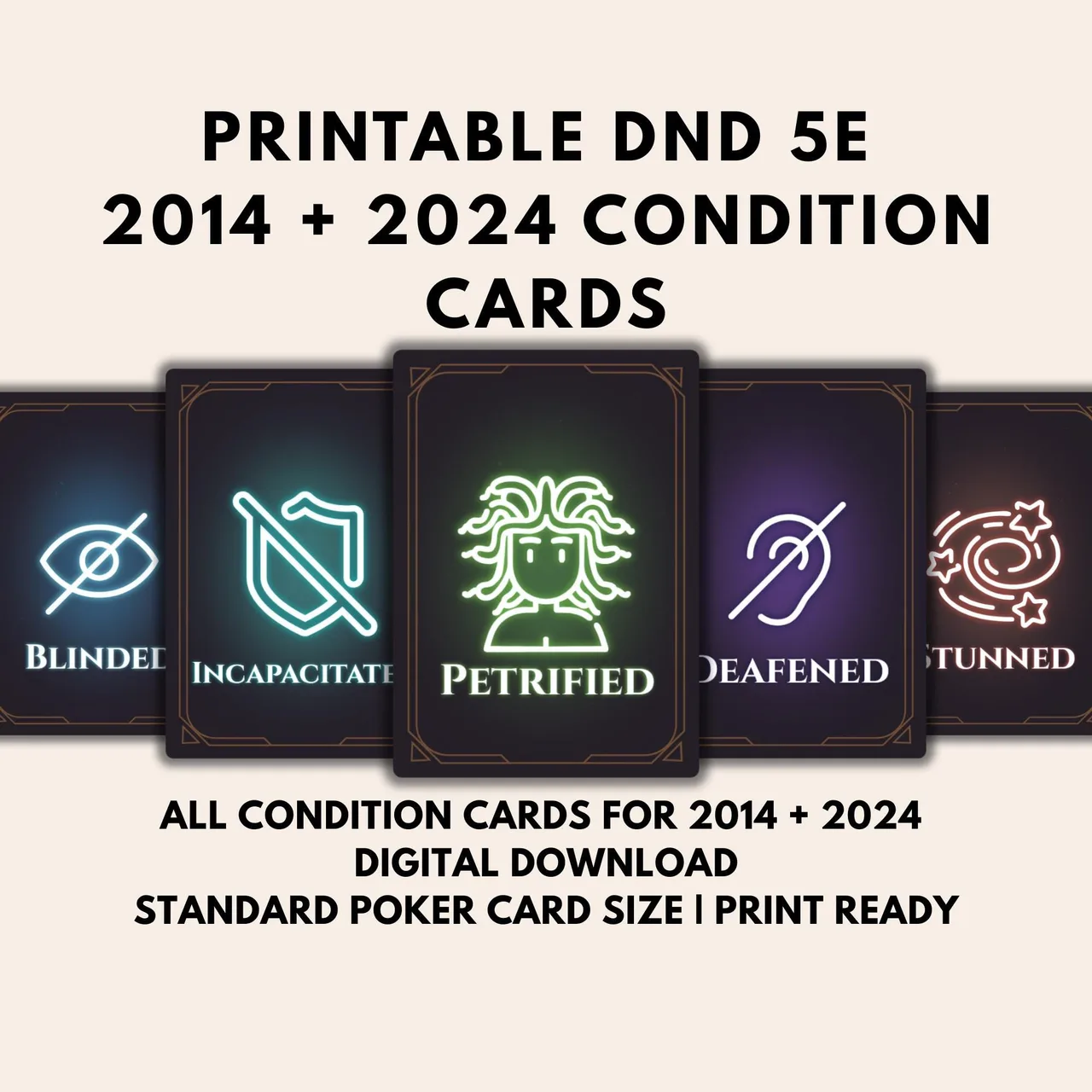
Fast, confident rulings keep the tension intact, so keep your condition references at your fingertips instead of flipping through a book mid-scene. A quick condition reference at the table, or a printed deck, stops a scary moment from deflating into a rules debate.
Set the table: light, sound, and the map in front of them
Horror is the one genre where presentation does real mechanical work. You’re trying to bypass the players’ analytical brains and reach the part that flinches.
Light. Drop the room lights. A single lamp or a candle changes how people speak — they get quieter, lean in, take it more seriously. It costs nothing and it works.
Sound. A low ambient drone or distant-wind loop under the whole session does more than a jump-scare sound effect. Silence is also a tool: cut the music dead at the moment of revelation and the table will hold its breath.
The map. A vague “you’re in a dark crypt” lets players keep the horror abstract. A specific map — the exact shape of the flooded chapel, the one corridor with no door — makes the place real and traps them inside it spatially. Running it on a tabletop display so the haunted location looms on the screen between them is worth more than any description.
This is the point in prep where a deep library of locations earns its keep. You rarely know in advance that you’ll need a ruined asylum, a fog-drowned graveyard, or a derelict ship’s hold until the session demands it.

A horror one-shot you can run tonight
Here’s a gothic skeleton you can flesh out in twenty minutes. The Last Rites at Hollowmere: the party shelters from a storm in a lakeside village where a funeral is underway. The deceased was the village warden, and the locals are unnervingly relieved he’s gone.
- The unease. The inn is warm and the food is good, but every villager steers conversation away from the lake. A child says the warden “is still in the water.” Use the NPC name generator for the parade of evasive locals.
- The escalation. At midnight the warden’s body is gone from the chapel. The bridge out has washed away. Villagers begin sleepwalking toward the shore. One party member finds lake-water in their own bedroll — they’re being claimed next.
- The reckoning. The warden drowned the village’s sins for decades and now the lake wants them back. The party can break the cycle, flee and leave Hollowmere to its fate, or be pulled under. Build the final confrontation with the encounter builder and keep the dawn deadline visible. Run initiative tight with an initiative tracker so the climax stays taut.
Swap the lake for a mine, the warden for a matriarch, the drowning for a fire, and you have a second one-shot from the same bones. That’s the quiet advantage of one-shots: a strong structure is endlessly reskinnable. If you’d rather start from a finished premise, we have ten horror one-shot ideas ready to run, and a breakdown of how the frightened condition works in D&D 2024 for the moment your monster finally appears.
Run it once and you’ll feel the difference a single focused night of dread makes. Then do the thing every DM does after a good horror session — start quietly planning the next one.
Frequently asked questions
- How do you make D&D actually scary?
- Take away the safety nets that make D&D comfortable: full resources, a big party, and the certainty of winning. Isolate characters, starve them of spell slots and hit points, and make the threat something they can't just stab. Fear comes from helplessness, not from a high-CR monster.
- How long should a D&D horror one-shot be?
- Aim for three to four hours of play, which is one evening session. Horror relies on sustained tension, and tension leaks out over multiple sessions as players relax between meetings. A single contained night, beginning to bleak to bloody end, hits hardest.
- What's the best horror subgenre for a D&D one-shot?
- Gothic horror is the easiest to run because D&D already supports it: crypts, curses, and a single looming villain. Folk horror (an isolated village with a terrible secret) and cosmic horror (something vast and uncaring) also work well. Pick one and commit, rather than blending three.
- How does the frightened condition work in D&D 2024?
- A frightened creature has disadvantage on ability checks and attack rolls while the source of its fear is within line of sight, and it can't willingly move closer to that source. The 2024 rules keep this wording largely the same as 2014. Used sparingly, it's a strong mechanical signal that something is genuinely wrong.
- Can you run horror with a high-level or large party?
- Yes, but it's harder, because powerful characters have answers to most threats. Lean on problems that combat can't solve: curses, social rot, time pressure, and consequences for using big magic. Splitting the party and limiting long rests also strips away the resources that make high-level play feel safe.
Keep reading
From the shop
Battlemaps, spell cards, and magic item cards, ready to print.
Browse MakeMythic on Etsy →