How to prep for Ravenloft: The Horrors Within
Getting ready to run Ravenloft: The Horrors Within? Here's how to prep the Domains of Dread, pick a Darklord, use Tarokka draws, and set a gothic table.
Ravenloft: The Horrors Within is the big Gothic horror release of 2026, and the best way to be ready for it is to prep the tone now rather than wait for the book. You don’t need to memorise every domain. You need one haunted place, one villain worth fearing, and a handful of techniques that make a D&D table actually tense. This guide covers what the book is, how to scope your first arc so it doesn’t collapse under its own ambition, and the practical table-craft — maps, mood, and mechanics — that turns a dungeon crawl into genuine horror. Do this and you can run it the week it lands.
What is Ravenloft: The Horrors Within?
Wizards of the Coast has announced The Horrors Within as a Domains of Dread sourcebook for the 2024 ruleset, with a release date of June 16, 2026. The announced contents include multiple domains and their Darklords with stat blocks and lore, eight horror-themed subclasses, new species and backgrounds, and Dark Gift feats. It ships with accessories including a map pack, token sheets, a DM screen, and a Tarokka deck.
The key thing to understand is the structure. Unlike Curse of Strahd, which is one fixed campaign, a Domains of Dread book hands you a toolkit of self-contained horror settings. Each domain is a pocket reality ruled by a Darklord — a villain cursed to rule a land shaped by their own sin. That modularity is a gift for prep, because you can run a single domain as a one-shot or short arc without committing to a hundred-hour campaign.
Treat any granular detail circulating before June 16 as unconfirmed. Prep the framework, not the rumours.
Start with one domain and one Darklord
The most common way Ravenloft prep goes wrong is trying to run everything. Sixteen domains is a menu, not a checklist. For your first outing, pick one domain whose theme excites you and one Darklord to anchor it.
A Darklord works best as a presence long before they’re a combat encounter. Decide three things about yours:
- Their sin. What did they do, and how has the domain warped to punish them? This is the emotional core of the horror.
- Their reach. How do the players feel the Darklord’s influence in everyday scenes — the weather, the villagers’ behaviour, what’s forbidden?
- Their tragedy. The best Gothic villains are pitiable as well as monstrous. A Darklord the party almost sympathises with lands harder than a generic evil.
Build outward from those three answers and you’ll have a coherent domain without reading the entire book first.
Run the dread, not the dungeon
Ravenloft is horror, and horror needs a different rhythm than heroic adventure. The default D&D loop — find threat, defeat threat, get reward — drains tension. Instead, withhold.
Spend your opening scenes on unease: small wrongnesses, evasive NPCs, a sense that the rules of the place are off. Don’t reveal the monster early. Let the players investigate and theorise, because the dread they generate in their own heads is stronger than anything you narrate.
Then escalate by removing safety. Close the exits. Block the long rest with a curse or a deadline. Kill an NPC the party liked. Horror lives in helplessness, so every comfortable certainty you strip away raises the temperature. If you want the full method, our guide on how to run a D&D horror one-shot breaks the structure down into three movements you can apply to any domain.
Use the Tarokka deck for fate and foreshadowing
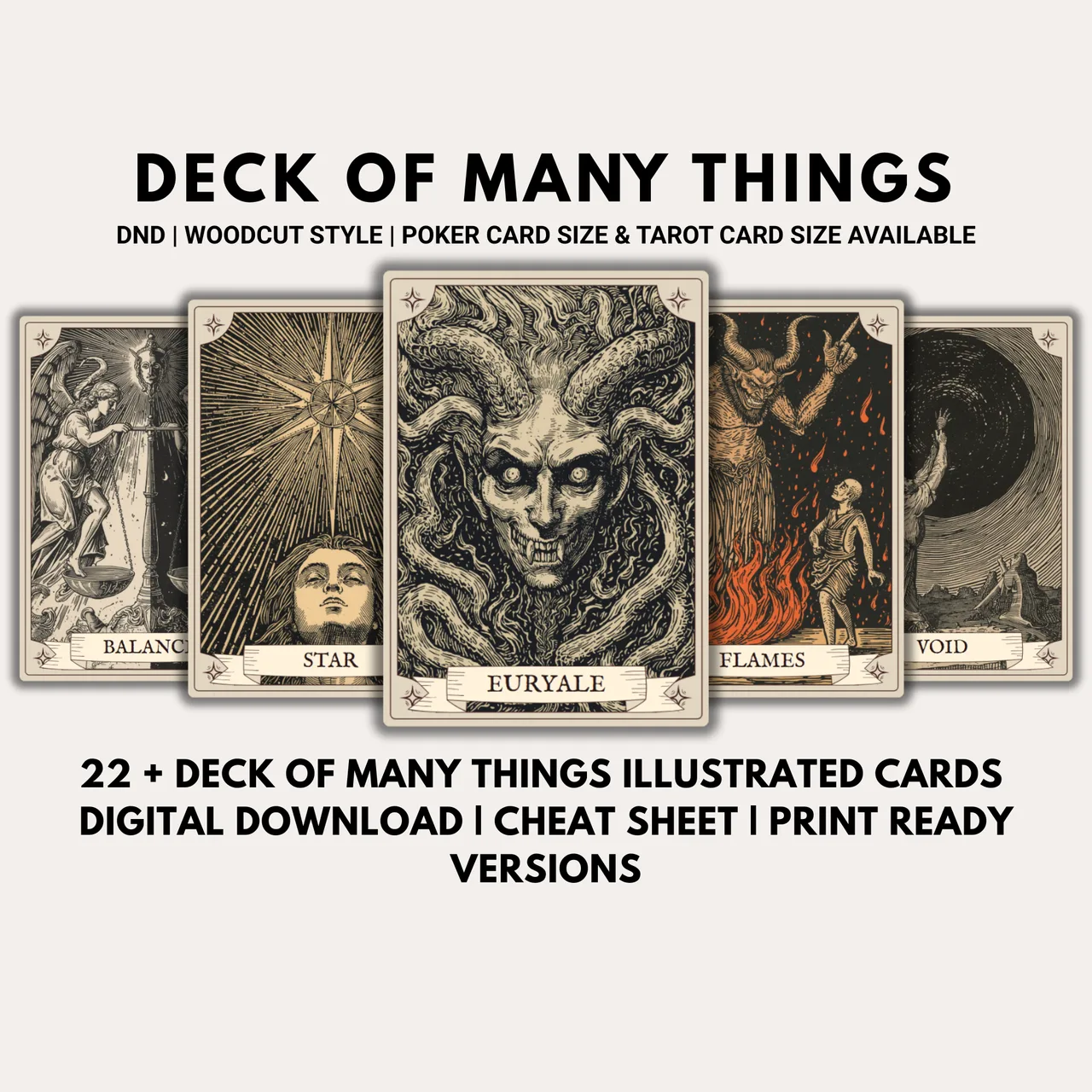
The Tarokka deck is a signature Ravenloft tool, and it’s one of the easiest ways to make a session feel ominous. A card reading at the start of an arc — predicting where a relic lies, who an ally is, where the Darklord can be confronted — does two jobs at once. It randomises your plot so each run feels different, and it drips foreboding into the table from the first scene.
You don’t need to wait for the official deck to use the technique. Any illustrated card draw works as an in-fiction oracle: a fortune teller in the village, a cursed reading that comes true, an omen the party can’t shake.
Build the gothic table: maps, light, and sound
Ravenloft rewards atmosphere more than almost any other setting, and atmosphere is mostly presentation. Three cheap moves do the heavy lifting.
Light. Run the session dim. A single lamp changes how players speak — quieter, slower, more invested.
Sound. A low ambient drone under the whole night, and dead silence at the moment of revelation, beats any jump-scare effect.
The map. A specific location traps players spatially in a way a vague description never will. The fog-drowned graveyard, the one staircase down, the chapel with the boarded door — when players can see the place, they feel cornered by it. Running it on a tabletop display so the domain looms between your players makes it physical.
The catch is that gothic horror burns through locations: crypts, manors, ruins, villages, swamps, asylums. You rarely know which you’ll need until the session demands it, which is exactly why a deep map library beats commissioning art one scene at a time.

A first-session plan for The Horrors Within
Here’s a lightweight skeleton you can drop your chosen domain into:
- Arrival. The party crosses into the domain — through the Mists, a storm, a wrong turn — and immediately can’t leave. Establish the rules of the place and one unsettling detail.
- The reading. A Tarokka-style draw seeds the arc: where the threat is, who can help, what the cost will be. Use the NPC name generator for the fortune teller and the villagers who follow.
- Investigation. Players explore the domain and uncover the Darklord’s sin. Resources start to bite; the exits stay closed.
- Confrontation. The truth lands. Build the climax with the encounter builder and run it tight with an initiative tracker. Remember the Darklord can be tragic as well as deadly.
Keep the Frightened condition in your back pocket for the reveal — and if you want to nail exactly how it works at the table, see how the frightened condition works in D&D 2024.
Prep this much and you’re ready to run The Horrors Within the day it releases. Then pick your second domain, because in Ravenloft there is always another one waiting in the fog.
Frequently asked questions
- When does Ravenloft: The Horrors Within release?
- Wizards of the Coast has announced a release date of June 16, 2026. It uses the 2024 ruleset and ships alongside accessories including a map pack, token sheets, a DM screen, and a Tarokka deck. Pre-launch interest is high, so prepping before release lets you run it the week it lands.
- Do I need Curse of Strahd to run The Horrors Within?
- No. The Horrors Within is a standalone Domains of Dread sourcebook, not a sequel to Curse of Strahd. It gives you multiple domains and Darklords to run rather than a single fixed campaign, so you can start fresh without prior Ravenloft material.
- Is Ravenloft good for a first-time DM?
- It can be, if you keep your scope small. Gothic horror is one of the easier tones to run because D&D already supports crypts, curses, and a single looming villain. Start with one domain and one Darklord rather than trying to juggle all of them.
- What subclasses are in Ravenloft: The Horrors Within?
- Wizards has announced eight new horror-themed subclasses, along with new species, backgrounds, and Dark Gift feats. Exact details arrive with the book on June 16, 2026, so treat any specifics before then as unconfirmed and prep around the broader Domains of Dread framework instead.
- What maps do I need to run Ravenloft?
- Gothic horror leans on a recurring set of locations: crypts, ruined chapels, fog-bound graveyards, decaying manor houses, and village streets. A broad battlemap library covers these without you commissioning art per session, which matters because horror works best when the haunted place feels specific and physical.
Keep reading
From the shop
Battlemaps, spell cards, and magic item cards, ready to print.
Browse MakeMythic on Etsy →