DnD naval combat: ship battlemaps and boarding
How to run a ship fight in DnD 5e without it falling apart: the battlemaps you need, boarding actions, naval chases, and the hazards that make water combat sing.
Naval combat is one of the most requested set pieces in 5e and one of the most commonly botched. The rules in the books are thin, the maths around ship speed is fiddly, and the first time most DMs try it the fight collapses into “everyone rolls to hit the other crew” with no sense of two vessels actually fighting. It doesn’t have to go that way. With the right battlemap and a three-phase structure, a ship fight becomes the session players talk about for months.
Why ship combat is harder to run than a normal fight
A standard encounter happens on stable ground. A naval fight has two things moving underneath the characters: the ships themselves, and the water. That changes everything.
Range matters in a way it usually doesn’t, because the ships spend most of the fight apart. Positioning matters, because the helmsperson is making decisions that affect every character on deck. And the environment is actively hostile, because the sea will drown anyone who goes over the side. If you run a ship fight as if it were a tavern brawl on a wooden floor, you lose all three of those, and players feel it.
The fix is to stop thinking of the ship as a battlemap and start thinking of it as a vehicle that happens to be the battlemap.
The three ship battlemaps you actually need
You don’t need a custom map for every vessel. Three formats handle almost every naval scene you’ll run.
The single-deck ship. One open deck, masts, rigging, a wheel at the stern. This is your workhorse for a fight contained to one ship, such as a mutiny, a monster boarding, or repelling raiders. Easy to read, fast to run.
The multi-deck cutaway. A galleon or man-o-war shown as stacked decks: main deck, gun deck, hold. You need this when the action moves vertically, characters chasing a fleeing captain below, or a fight that spills down into the cargo. Number the decks and treat the hatches and ladders as the chokepoints they are.
The two-ship boarding layout. Two hulls side by side with open water between them. This is the one most DMs forget to prepare, and it’s the one a boarding action lives or dies on. Players need to see both ships and the gap to make decisions about when and where to jump across.
Underneath all three, an open-water tile lets you slide the ships apart for the chase and together for the board. Czepeku, Angela Maps and others publish ship-boarding scenes specifically because the demand is so consistent.
Phase one: closing the distance
The fight opens with the ships apart. This is the ranged phase. Archers and casters fire across the water, the helmspeople manoeuvre for position, and anyone with a ballista or deck weapon gets to use it.
Keep it simple. On initiative count 20 (losing ties), each ship moves its speed in the direction its helmsperson chooses. A typical sailing ship moves around 40 to 80 feet a round in good wind. Characters act on their own initiative on top of that movement. Give the helmsperson meaningful choices: close fast and risk the enemy’s broadside, or hang back and trade arrow fire.
A ticking element helps here. The enemy is trying to reach the harbour, or reinforcements are an hour out, or the storm is closing. Without pressure, players will sit at range and plink, and the fun phase never arrives.
Phase two: grappling alongside
When the ships come within a few feet, someone throws grappling hooks or swings out a boarding plank. Mechanically, this pins the two ships together so they move as one. Narratively, it’s the moment the fight tips from artillery duel to desperate melee.
This is worth a beat of its own. The crew that lands the grapples chooses where the ships meet. Cutting a grappling line is an action with a DC, which gives the defenders a way to break free and reopen the range if the boarding goes badly.
Phase three: the boarding melee
Now the two crews are in reach. A character crossing the gap makes an Athletics check (DC 10 in calm water, up to 15 in heavy seas) or uses a plank or hook to cross safely. Fail, and they fall into the water between two heaving hulls, which is exactly as bad as it sounds.
From here it’s a normal melee with three twists that keep it tense:
- Fire spreads. Sails and rigging are flammable, and a single fireball can change the whole battle. Track it. Players will absolutely try it.
- Going overboard. A shove or a failed jump puts a character in the sea. Swimming in armour, currents and whatever lives in the deep all make this a real cost, not a free reposition.
- Cut the rigging. A clever player will drop a mast on the enemy deck or cut the lines to swing across. Reward it.
Make the sea a character
The single thing that turns a competent ship fight into a memorable one is treating the water as an active threat rather than a backdrop. A character knocked prone near the rail is one bad roll from the deep. A breach in the hull starts the hold flooding, putting a clock on anyone below. Rain and spray impose disadvantage on ranged attacks and reward closing to melee.
You don’t need to track all of it at once. Pick one or two hazards per fight and lean into them. The map does the rest, because a good naval battlemap already shows the rails, the rigging, the hatches and the water, and players read the danger straight off the image.
The MakeMythic naval map collection
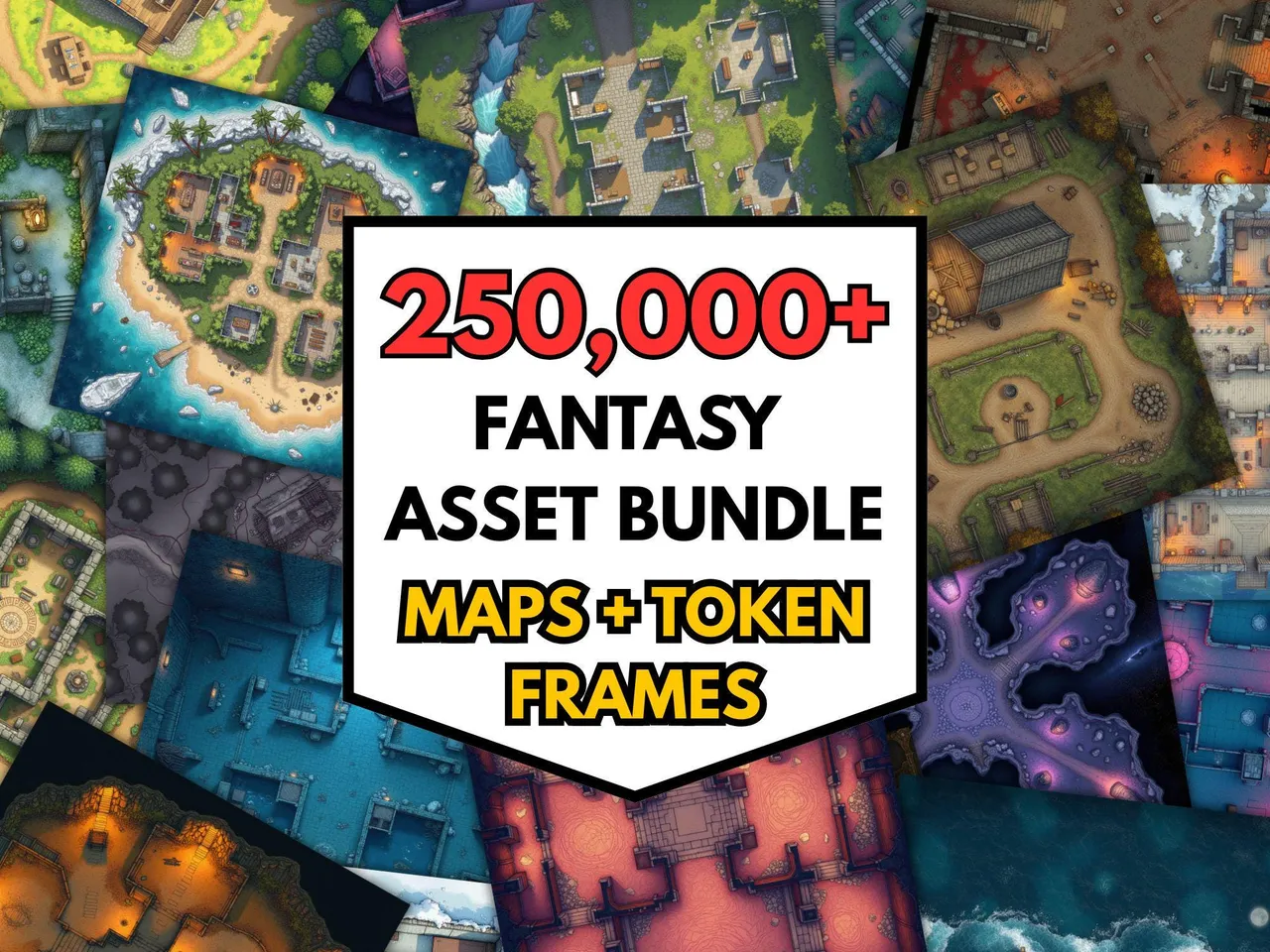
The 250,000+ RPG Battlemaps Mega Bundle ($40 $12.00) covers the full range of naval scenes: single-deck cutters and fishing boats, multi-deck galleons and men-o-war shown in cutaway, pirate ships, harbours and docks, and open-water tiles to slide underneath for the chase. Everything is high resolution and gridless, so it drops straight into Roll20 or Foundry, or prints clean for an in-person boarding action across the table.
One library means you’re never stuck improvising a sea battle without a deck to fight on, whether your players are repelling a kraken or storming a slaver’s galleon at dawn.
Frequently asked questions
- How do you run a ship-to-ship fight in DnD 5e?
- Treat the two ships as moving terrain. Give each a speed and a helmsperson who steers on initiative count 20, then run character actions normally on top of that movement. Combat happens in three phases: closing the distance (ranged fire and manoeuvring), grappling alongside, and the boarding melee. Use a battlemap that shows both decks so players can see range and positioning.
- What battlemaps do I need for a naval encounter?
- Three types cover almost everything: a single-deck ship for a self-contained fight, a multi-deck cutaway for a man-o-war or galleon where action moves between levels, and a two-ship layout for boarding actions. Open-water tiles underneath let you reposition the ships as the chase develops.
- How does boarding work in DnD?
- Once two ships are adjacent, treat the gap as difficult terrain or a short jump (Athletics check, DC 10 to 15 depending on the seas). Grappling hooks and boarding planks remove the check. From there it's a normal melee, except a failed jump or a shove means falling into the water between two hulls, which is its own problem.
- What hazards should a ship battlemap include?
- Fire spreads fast on a wooden ship and players love setting sails alight. Add the risk of falling overboard (swimming in armour, currents, things in the water), rigging that can be climbed or cut, and below-deck flooding if the hull is breached. These turn a flat melee into a scene with real decisions.
- Where can I get DnD ship and naval battlemaps?
- MakeMythic on Etsy includes ships, galleons, pirate cutters, harbours, and open-water tiles in its 250,000+ battlemap bundle, all high resolution and gridless for VTT use or print. One bundle covers single-deck skirmishes through to full multi-deck boarding actions.
Keep reading
From the shop
Battlemaps, spell cards, and magic item cards, ready to print.
Browse MakeMythic on Etsy →