DnD tavern battlemaps and running a tavern scene
The tavern is where most campaigns begin. A practical guide to what a great tavern battlemap needs, running brawls and downtime, and using one inn as a campaign home base.
The tavern is the most-used location in DnD, and for good reason. It’s where campaigns begin, where parties regroup, where quests get handed out and where the night sometimes ends in a thrown chair. Search any battlemap marketplace and “tavern” is one of the highest-volume terms there is. Yet a lot of DMs treat the tavern as a flat backdrop, a single open room they describe and move on from. A good tavern map, used well, is one of the hardest-working assets you own.
Why the tavern earns its place
The tavern solves a structural problem that every campaign opens with: a group of strangers needs a believable reason to be in the same place. A tavern is neutral ground. A mercenary, a noble and a hermit can all plausibly be sitting in the same common room without anyone needing to explain why. That alone makes it the natural session-one location.
It also gives nervous players a soft landing. The first scene of a campaign is when everyone is still working out who their character is. A calm room with a fire, a drink and some low-stakes conversation lets them find their feet before a goblin ever draws a blade. Drop the party straight into combat and the timid players never get a chance to speak.
And it keeps working long after session one. The tavern is where rumours circulate, where the mysterious stranger in the corner watches the party, where a quest-giver can approach without it feeling staged.
What a great tavern battlemap needs
A flat single room limits you. The tavern maps that carry a whole evening share a few features.
A main common room with a bar. The heart of it. Scattered tables give you cover for a brawl and natural seating for conversations. The bar is where the keeper stands, where information gets traded, where a tab goes unpaid.
At least one private back room. Call it the snug. This is where the party takes a meeting they don’t want overheard, where the contact slides into a booth, where the tone drops to a whisper. A tavern without a quiet corner forces every secret conversation into a crowded room, which rarely makes sense.
Lodging upstairs. A staircase to rented rooms above turns the tavern into an inn and gives you somewhere for the night-time ambush, the room searched while the party drinks downstairs, or simply a place to take a long rest.
A kitchen and a back exit. These matter the moment things go wrong. A back door is the escape route, the way the assassin slips out, the alley the chase pours into. The kitchen is fire, knives and a second way upstairs.
A map with all of these, on one image, can run an entire session without you ever changing the scene.
Running a tavern brawl
The brawl is the tavern’s signature combat, and it should feel different from a normal fight. Most of the participants are drunk commoners, not killers. Run it light.
Patrons swing chairs, bottles and fists, dealing minor damage with a knockout rather than a kill. The objective is rarely death. It’s to eject a troublemaker, grab a fleeing target, or get out of the building before the guard arrives. Lean on the furniture: tables are cover and difficult terrain, the fire is a hazard, the bar is something to vault. Let players shove enemies into all of it. A shove that sends a thug crashing through a table is more satisfying than three points of damage, and it’s exactly the moment the map pays off.
Keep a clock running. The town guard is on its way. That turns the brawl from an open-ended scrap into a scene with a deadline, which is always more fun.
The tavern as downtime and intrigue
Not every tavern scene is a fight. The map does just as much work for the quiet sessions.
Downtime lives here: carousing, gathering rumours, spending a rest day. The private room hosts the tense negotiation. The crowded common room is perfect for a scene where the party is trying to overhear a conversation two tables away, or pass a message without being seen. A good tavern map gives you the geography to run all of that, because the distances and sightlines are right there on the image instead of held loosely in your head.
Pick one inn and make it home
The most valuable thing you can do with a tavern map is reuse it. Choose one inn early and make it the party’s base. The same battlemap becomes the place they come back to after every adventure, the keeper becomes a recurring NPC, the regulars become familiar faces.
This pays off twice. The players develop a genuine attachment to a place that’s theirs, which makes the world feel lived-in. And you save prep, because you already know the layout, the staff and the regulars cold. When the party says “we head back to the Gilded Eel,” you don’t reach for a new map. You drop the one you’ve used ten times, and everyone at the table relaxes into a place they know.
The MakeMythic tavern collection
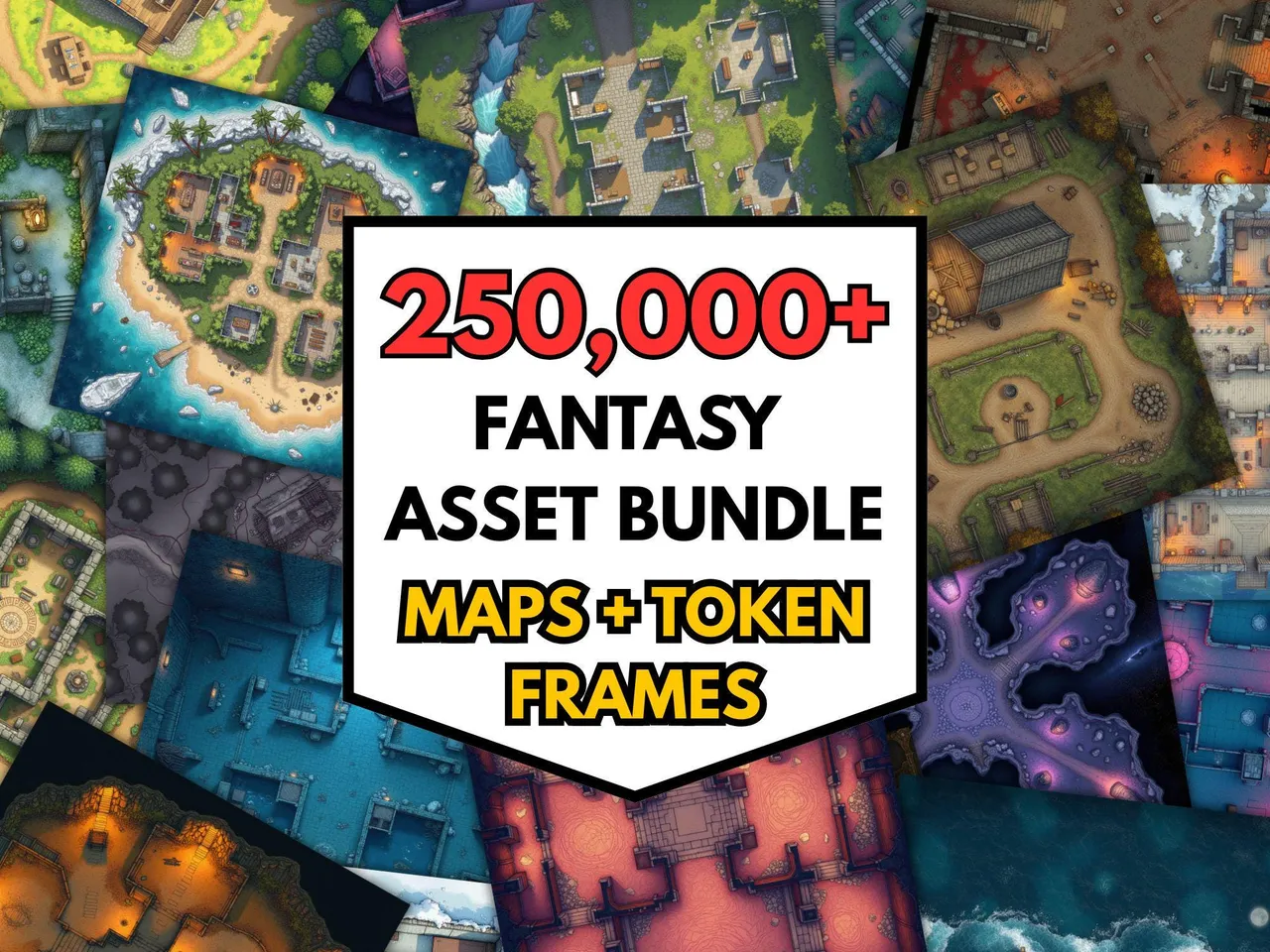
The 250,000+ RPG Battlemaps Mega Bundle ($40 $12.00) includes taverns, inns and alehouses in a range of styles, from a grubby dockside dive to a warm coaching inn, along with their upper floors and back rooms. Because there are many of them, your campaign’s taverns don’t all have to look the same, and you can match the map to the town.
Everything is high resolution and gridless, so it imports cleanly into Roll20 or Foundry, or prints out for an in-person session where the party can lean over the table and point to exactly which booth they’re watching.
Frequently asked questions
- What should a DnD tavern battlemap include?
- A good tavern map gives you a main room with a bar and scattered tables, at least one private back room for quiet conversations, a staircase to lodging above, a kitchen, and a back exit. The multiple zones are what let a single map carry a whole evening, from a tense meeting in the snug to a brawl that spills out the back door.
- How do you run a tavern brawl in DnD?
- Run it as a low-lethality skirmish. Most patrons use improvised weapons (chairs, bottles, fists) dealing 1d4 plus a knockout option, and the goal is usually to escape, eject someone, or grab a target rather than kill. Use the furniture as cover and difficult terrain, and let players shove enemies into tables and fires.
- Why do so many DnD campaigns start in a tavern?
- A tavern is a low-stakes, neutral space where strangers can plausibly meet, which solves the awkward 'how do these characters know each other' problem. It gives new players a calm first scene to find their character before any danger, and it's somewhere quest-givers can approach the party naturally.
- How can I reuse one tavern map across a campaign?
- Make one inn the party's home base. The same battlemap becomes the place they return to between adventures, hear rumours, meet contacts, and recover. Reusing one well-chosen map builds familiarity, so players feel ownership of the space, and saves you prep because you already know the layout cold.
- Where can I get DnD tavern and inn battlemaps?
- MakeMythic on Etsy includes taverns, inns, alehouses and their upper floors in its 250,000+ battlemap bundle, high resolution and gridless for VTT or print. One bundle gives you a range of taverns so your campaign's inns don't all look identical.
Keep reading
From the shop
Battlemaps, spell cards, and magic item cards, ready to print.
Browse MakeMythic on Etsy →