Running sci-fi and cyberpunk encounters in D&D
How to run futuristic, sci-fi and cyberpunk scenes in D&D 5e — Spelljammer, magitek cities, skydocks and neon streets — plus the battlemaps that make them land.
Not every D&D campaign stays in the tavern-and-dungeon lane. Spelljammer put the game in space, Eberron runs on magitek and lightning rails, and no end of homebrew worlds have a gleaming, cabled district where the magic looks a lot like technology. Running those scenes is easier than it sounds, as long as you lean on flavour over rules bloat and put the right maps on the table.
D&D already does the future
The instinct is to think 5e can’t do sci-fi, but it does, through the lens of high magic. In a Spelljammer game, ships crewed by adventurers sail wildspace and the astral sea. In Eberron, airships and the lightning rail are everyday infrastructure, and warforged walk the streets. The trick both settings use is the same: magic occupies the cultural and mechanical role that technology plays in a sci-fi story.
That means you rarely need new rules. A magitek city runs on the same spell and combat engine as a medieval one; it just looks like chrome and arcane neon instead of stone and torchlight.
Build encounters around verticality and tech
The reason a cyberpunk or sci-fi scene feels different at the table isn’t the setting, it’s the geometry. These environments are vertical and dense: catwalks and gantries, elevators and drop-shafts, server rooms and reactor cores, streets stacked under skyways.
Design encounters that use that space. Put objectives on different levels, add hazards that can be triggered (an electrified floor, a coolant leak, a vehicle that explodes), and turn “hacking” a door or a turret into a short skill challenge against a DC. The result plays noticeably differently from a corridor crawl, and players remember it.
Reskin, don’t rebuild
The fastest way to bog down a futuristic session is to homebrew a whole technology subsystem. Don’t. Reskin instead.
A security drone is a modified construct or a reflavoured swarm. A laser turret is a ballista or a spell trap with a new coat of paint. A cybernetic enforcer is a thug or gladiator statblock with chrome bolted on. A “netrunner” breaking into a system is a series of Arcana or Investigation checks against escalating DCs. Keep the mechanics familiar and the flavour will carry the difference. Your players won’t miss the extra rules; they’ll just feel the neon.
Where the maps come in
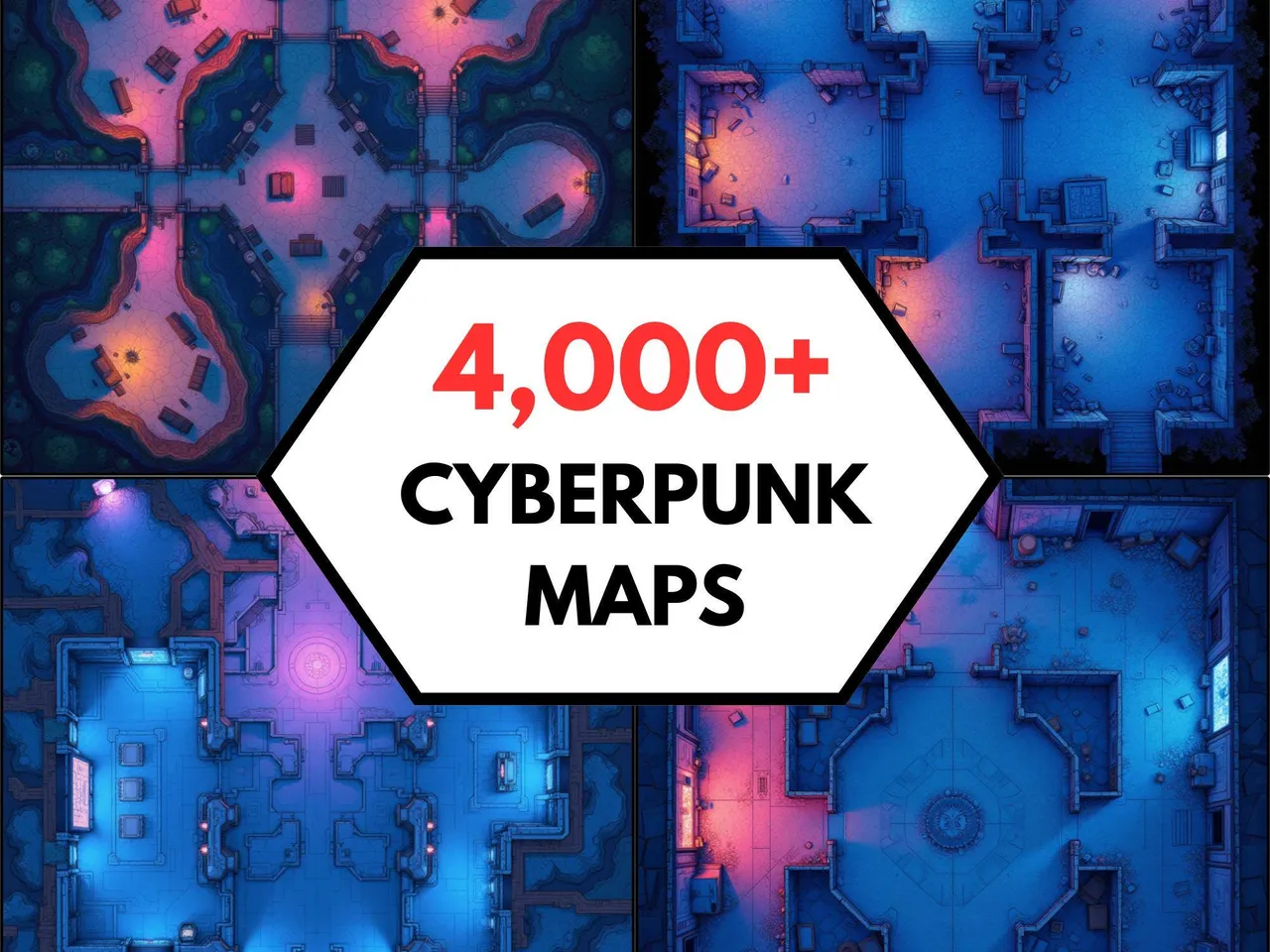
Sci-fi and cyberpunk scenes are the ones that most benefit from a real map, because so much of what makes them work, the levels, the tech, the cover, is spatial. Narrating a skydock is fine; showing one, with the airship berths and the gantries and the cargo cranes, is what sells it.
The Cyberpunk and Sci-Fi Battlemaps ($24 $7.20) pack covers magitek streets, skydocks and futuristic interiors, gridless and ready for Roll20 or Foundry. And if your campaign only visits the future occasionally, the 250,000+ RPG Battlemaps Mega Bundle ($40 $12.00) folds sci-fi, planar and steampunk scenes in alongside every classic fantasy biome, so one purchase covers both the dungeon and the skydock the same campaign might need.
Frequently asked questions
- Can you run sci-fi and cyberpunk scenes in D&D 5e?
- Yes. 5e handles high-magic technology well through settings like Spelljammer and Eberron, where magic fills the role technology plays elsewhere. Magitek cities, airships, skydocks and clockwork machines all work with standard 5e rules, and reskinning existing monsters and hazards covers most of what a futuristic scene needs.
- How is a cyberpunk map different from a dungeon map?
- Cyberpunk and sci-fi maps are vertical, dense and full of interactive tech: catwalks, elevators, server rooms, neon-lit streets, vehicles and cover that can explode or electrify. They reward encounters built around verticality, hacking-style skill challenges and environmental hazards rather than simple room-to-room corridors.
- What settings support sci-fi D&D?
- Spelljammer takes 5e into wildcat space with ships and astral encounters. Eberron leans into magitek, lightning rails and airships. Beyond the official settings, plenty of homebrew campaigns drop a futuristic or planar-tech district into an otherwise classic fantasy world, which is where cyberpunk and magitek map packs earn their place.
- How do you stat futuristic tech in 5e?
- Reskin rather than rebuild. A laser turret is a reflavoured ballista or spell trap, a security drone is a modified construct, and a hacking challenge is a skill check series against a DC. Keeping the mechanics familiar lets the sci-fi flavour sit on top without slowing the game down with new subsystems.
- Where can I get sci-fi and cyberpunk battlemaps for D&D?
- MakeMythic on Etsy sells a cyberpunk, magitek and sci-fi battlemap pack with skydocks and futuristic interiors, and the wider 250,000+ battlemap mega bundle includes sci-fi, planar and steampunk scenes alongside every classic fantasy biome.
Keep reading
From the shop
Battlemaps, spell cards, and magic item cards, ready to print.
Browse MakeMythic on Etsy →