Theatre of the mind vs battlemaps: when to use each
Should you run DnD combat with a battlemap or in the imagination? An honest comparison of theatre of the mind and grid maps, when each wins, and how to blend them.
This is one of the longest-running debates in DnD, and it gets argued as if you have to pick a side for life. You don’t. Theatre of the mind and battlemaps are tools, and a good DM reaches for whichever one fits the moment. The useful question isn’t “which is better,” it’s “which one serves this particular scene.” Here’s an honest breakdown of what each does well, so you can choose deliberately instead of defaulting.
What each approach actually is
Theatre of the mind runs the game in the imagination. No map, no minis. You describe the scene, the players tell you what they do, and positioning lives in the shared mental picture and a bit of common-sense adjudication. “You’re about thirty feet from the archers, with a low wall between you” is enough to act on.
Battlemaps make the scene physical. A grid, tokens, measured distances. Everyone can see exactly where they stand, how far they can move, and what’s in range. Positioning stops being a conversation and becomes something players read straight off the board.
Both are legitimate ways to play. They just optimise for different things: speed and flexibility on one side, precision and tactics on the other.
Where theatre of the mind wins
Theatre of the mind shines when speed and imagination matter more than precision.
It’s unbeatable for roleplay and social scenes, where a map adds nothing and a grid would only make a tense negotiation feel like a board game. It’s ideal for exploration and travel, where you want to keep the story moving without pausing to draw every corridor. And it’s perfect for simple, low-stakes combat, the three bandits who jump the party on the road, where setting up a map costs more time than the fight is worth.
Its great strength is flexibility. Players can attempt anything without a token telling them it’s out of range, and the DM can adjust on the fly. Its weakness is that it depends on everyone sharing the same mental image, and the more complex the fight, the more those images drift apart. “Wait, I thought the ogre was next to me” is the sound of theatre of the mind reaching its limit.
Where battlemaps win
Battlemaps come into their own when positioning carries real weight.
For a big set-piece battle with a dozen combatants, a map keeps everyone clear on who’s where. For fights with difficult terrain, verticality or environmental hazards, the map makes the tactics legible: this is the chasm, this is the high ground, this is the only bridge. And for any encounter built around area-of-effect spells, a map is close to essential, because “does the fireball catch two enemies or four” is a question only a grid can answer without an argument.
The map’s strength is that it makes tactical decisions concrete and fair. Nobody can fudge their position, range is unambiguous, and clever positioning gets rewarded because it’s visible. The cost is setup and pace: a map takes a moment to put down, and it can make a trivial fight feel more serious than it needs to be. That cost is trivial on a VTT or with a ready library, and well worth paying for the fights that deserve it.
The honest comparison
The fault line is simple. Theatre of the mind trades precision for speed and imagination. Battlemaps trade a little speed for precision and tactical depth.
If your group loves the cinematic flow of describing the action and rarely argues about positioning, theatre of the mind will serve you well most of the time. If your players are tacticians who relish a clever flanking move or a perfectly placed spirit guardians, they’ll get more out of a map. Most tables sit in the middle, which points to the real answer.
The best approach: switch on purpose
Experienced DMs rarely commit to one mode. They blend them, and the blend is more than the sum of its parts.
Run the journey, the tavern conversation and the minor roadside scuffle in the imagination, keeping the pace brisk. Then, when the party reaches the set-piece, the dragon’s lair, the collapsing bridge, the throne room ambush, drop a battlemap and let the tactics breathe. The contrast itself is a tool: by reserving the map for the fights that matter, you signal to the players that this one is important. They lean in.
The only thing that makes this hard is having the right map ready when the moment comes. Hunting for a battlemap mid-session kills the momentum you built. The fix is a library deep enough that the map is always a click away, so switching into tactical mode costs you nothing.
Have the right map ready for the fights that need one
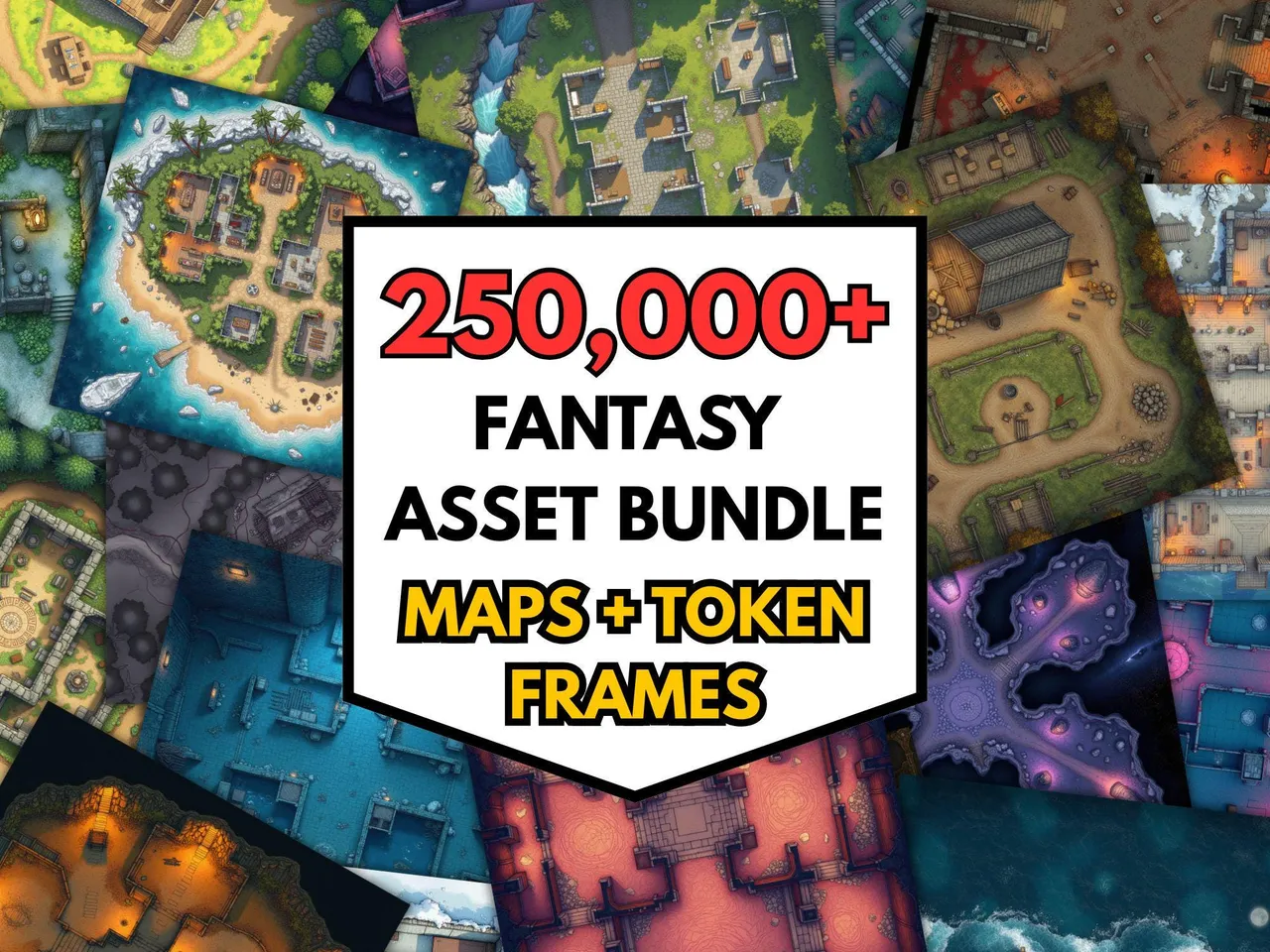
The 250,000+ RPG Battlemaps Mega Bundle ($40 $12.00) from MakeMythic exists for exactly the hybrid approach. Run what you like in the imagination, and when a fight earns a map, pull the right one from a library spanning every biome and location, high resolution and gridless for Roll20, Foundry or print.
A deep library is what makes switching painless: you’re never stalling the table to find a map, so theatre of the mind and battlemaps both stay available, ready whenever the scene calls for them.
Try the map side for free. If your table has always run theatre of the mind, the cheapest way to test the alternative is the free battlemap pack — run one combat on a grid and see whether the group prefers it. Tokens and minis for it are on the free downloads page.
Frequently asked questions
- What is theatre of the mind in DnD?
- Theatre of the mind is running combat and scenes entirely in the imagination, with no map or miniatures. The DM describes the situation, players describe what they do, and positioning is handled through conversation and rough estimates rather than exact squares. It's fast and flexible but relies on everyone holding the same mental picture.
- Are battlemaps better than theatre of the mind?
- Neither is strictly better; they suit different moments. Battlemaps win for tactical combat where precise positioning, range and area spells matter, and for complex fights with lots of moving parts. Theatre of the mind wins for fast, simple encounters, social scenes and exploration where a map would only slow things down.
- When should I use a battlemap in DnD?
- Use a battlemap when positioning carries real weight: big set-piece battles, fights with difficult terrain or verticality, encounters built around area-of-effect spells, and any moment where you want players to make tactical decisions. The map makes those choices concrete and prevents arguments about who can reach what.
- Can you mix theatre of the mind and battlemaps?
- Yes, and most experienced DMs do. Run roleplay, travel and minor scuffles in the imagination to keep the pace up, then drop a battlemap for the encounters that deserve the tactical depth. Switching deliberately gives you the speed of theatre of the mind and the clarity of a map exactly where each one helps most.
- Where can I get battlemaps for the fights that need one?
- MakeMythic on Etsy sells a 250,000+ battlemap bundle covering every biome and location, high resolution and gridless for Roll20, Foundry or print. A deep library means that when a fight does deserve a map, you already have the right one ready instead of running it on the fly.
Keep reading
From the shop
Battlemaps, spell cards, and magic item cards, ready to print.
Browse MakeMythic on Etsy →