How to Write a D&D Session Recap Players Actually Read
A short formula for D&D session recaps players actually read: open with a promise, cut the clutter, end on a question, plus a fill-in template.
A D&D session recap players actually read is short, stakes-first, and ends on a hook. Most recaps fail for the same reason: they read like meeting minutes. The DM dumps a blow-by-blow of every room and every die roll, the emotional beats vanish, and players scroll past it. The fix is a formula you can run in ten minutes. Open with a promise, cut the clutter, end on an open question, and post it somewhere players will see it. Do that and the recap stops being a chore nobody reads and starts pulling people back to the table.
Open with a promise, not a date stamp
The first sentence decides whether anyone reads the rest. Before you write a word, answer one question: why should a player read this instead of scrolling past it? That answer is your promise, and it goes first.
A weak recap opens with “Session 14. The party left the inn and travelled north.” A strong one opens with “The cult knows your names now, and they have a three-day head start.” One is a date stamp. The other is a threat the reader cannot ignore.
Your promise should point at one of three things: a threat closing in, a choice the party still has to make, or a consequence they have not felt yet. Lead with whichever one is most alive right now. Everything else in the recap supports that opening line.
Cut the clutter down to three or four scenes
Once the promise lands, the body is where most recaps drown. You do not need every room, every shopping trip, or every failed perception check. You need the moments that changed something.
Group the session into three to five scenes, and give each scene one job. A scene either reveals a secret, forces a decision, lands a consequence, or introduces someone who matters. If a scene does none of those, it does not belong in the recap. The grocery-run to restock arrows is not a scene. The shopkeeper who recognised the party’s wanted poster is.
Write each scene in two or three sentences. Name any new NPC and what they want, because names are what players forget first. Note loot only if it changes a choice, like a key, a letter, or a magic item with strings attached. Keep the prose plain. You are reminding, not narrating a novel.
It helps to think of a recap the way you think of a trailer rather than the film. A trailer skips the slow parts and shows you the moments that make you want to watch. Your recap does the same job for last session: it surfaces the turns that mattered and trusts players to remember the rest. When you find yourself writing “and then they walked to the next town,” delete it and move to the line where something actually shifted.
A useful rhythm is: promise, three or four scenes, a threads line, a closing question. That structure fits in 150 to 250 words and reads in under a minute, which is the whole point.
Name the open threads
After the scenes, add a single line that lists what is still unresolved. Call it threads, leads, or loose ends, whatever fits your table. This is the part players reread before the next session, because it tells them what they can still pull on.
Threads are the questions you deliberately left open: the locked door you never reached, the NPC who lied, the bounty that is still active, the debt nobody has paid. Listing them does two things. It reminds players what they care about, and it quietly steers them toward the hooks you have prepped without you having to railroad anything.
Keep it to a short list. Three to five threads is plenty. More than that and you have replaced one wall of text with another.
End on an open question
The last line of a recap should not be a full stop. It should be a question pointed straight at the players.
Finish with the decision waiting for them next session. “So do you chase the cult north, or warn the village they are about to hit first?” A question does what a summary cannot: it makes players think about their next move before they sit down, which means session 15 opens with intent instead of ten minutes of “what were we doing again?”
This is also where the recap earns its keep as prep. A recap that ends on a real choice is doing your table-setting for you, between sessions, for free.
Where to post it: a pinned Discord channel
A great recap nobody can find is wasted. Give recaps a permanent home: a dedicated channel in your group’s Discord, with every recap pinned or simply posted in order so they form a scrollable campaign log.
A separate recaps channel beats dropping them in general chat, where they get buried under meme posts and scheduling talk within a day. When recaps live in one place, players reread the last two before a session without asking you to repeat yourself. The same channel is a natural home for a pinned initiative order or the current party loot list if your group likes that.
Post within 24 hours, while the session is fresh in your own head. Memory degrades fast. Ten minutes of recap the night of the game is worth an hour a week later, and the gap between sessions is exactly when player interest cools, so a timely recap is a small lever with a big effect.
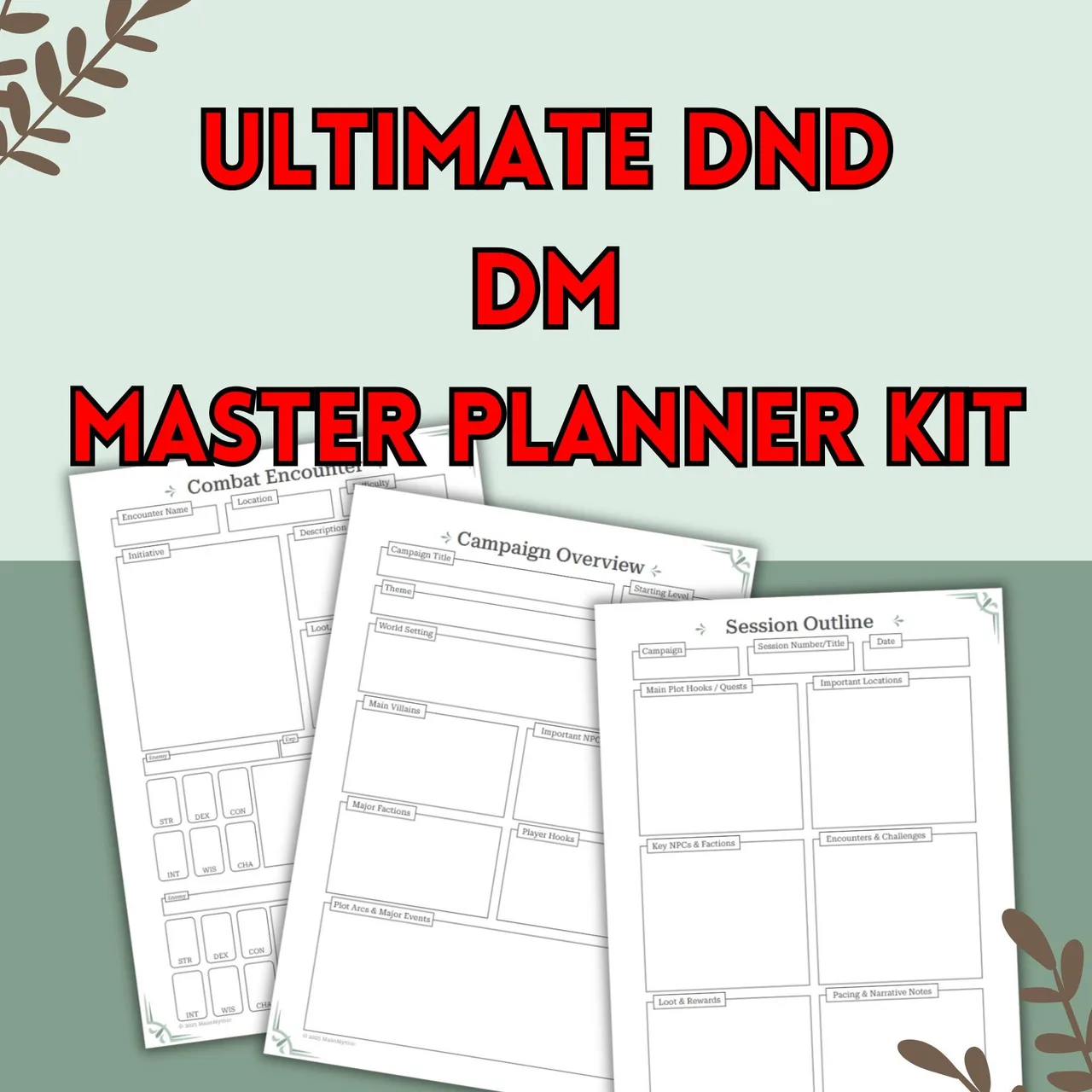
Recaps are one piece of the between-session loop: write the recap, line up the next hooks, restock the names and stat blocks you will need. If you keep that loop in spreadsheets rather than scattered notes, a planning kit pays for itself in saved evenings.
The “have a player write it” variant
You do not have to write the recap yourself. Handing it to a player is often the better move, and it solves two problems at once: it takes a job off your plate, and it shows you exactly what landed for the people at the table.
Ask a player to write the recap in their character’s voice, as a journal entry or a letter home. The result has personality the DM version rarely matches, and reading it tells you which beats the party actually cared about. That is free feedback on your own pacing.
Make it worth their while. Offer inspiration, a small gold bonus, or a minor boon to whoever writes the recap that week, and rotate the job so it never becomes one person’s chore. Set the same simple rules: open with a promise, keep it short, end on a question. The format does the heavy lifting no matter who holds the pen.
One quiet benefit: when players write recaps, they reveal their own theories and suspicions on the page. You will see them misread an NPC, fixate on a clue you thought was minor, or invent a connection you never planned. That is gold for the next session. You can lean into the theory that excites them or gently correct the one that will send the party down a dead end, all before anyone rolls a die.
A fill-in session recap template
Copy this, fill the blanks, and post it. It works whether you or a player writes it.
Session [#] — [campaign name]
The promise: [One sentence naming a threat, a choice, or a consequence the party now faces.]
What happened:
- [Scene 1 — the secret, deal, fight, or new face, in two sentences.]
- [Scene 2 — same.]
- [Scene 3 — same.]
New names: [NPCs introduced and what each one wants.]
Loose threads: [3–5 unresolved leads the party can still pull on.]
So: [The open question. What does the party decide next?]
That is the whole formula. The promise grabs them, the scenes remind them, the threads keep the campaign alive in their heads, and the closing question sends them into the next session already deciding.
If you want help filling those blanks, two free tools on the hub plug straight into this loop. The NPC name generator keeps your “new names” line stocked when you need a shopkeeper or a cult lieutenant on the spot, and the initiative tracker makes it easy to note where a fight stood when you broke for the night, so next session’s recap and reset take seconds.
For the wider prep picture, our complete D&D session 0 guide sets up the campaign that your recaps then carry, and our roundup of the best free D&D DM tools covers the rest of the between-session kit. Get the recap right and the gap between sessions stops working against you.
Frequently asked questions
- How do you write a D&D session recap players actually read?
- Open with a one-sentence promise that points at a threat, a choice, or a consequence. Then keep the body to three or four scenes, list the open threads, and end on a question about what the party does next. Short and stakes-first beats a complete play-by-play every time.
- How long should a D&D session recap be?
- Aim for 150 to 250 words. A recap is a hook, not a transcript, so cut anything that does not change a decision or raise a stake. If players have to scroll, most will skip it, and a skipped recap does no work between sessions.
- Where should you post your D&D session recap?
- Pin it in a dedicated recaps channel in your group's Discord, posted within 24 hours of the session. A pinned channel means every recap lives in one scrollable place players can re-read before the next game, instead of getting buried in general chat.
- Should the DM or a player write the session recap?
- Either works, and rotating it to a player is often better. A player-written recap in their character's voice adds personality, shows you what landed, and frees you up. Offer a small in-game reward, like inspiration, to whoever writes it.
- When should you write a D&D session recap?
- Write it within 24 hours while the session is fresh. Memory degrades fast, so ten minutes of notes right after play is worth an hour a week later. If you cannot write it that night, jot three bullet points before you close the laptop.
Keep reading
From the shop
Battlemaps, spell cards, and magic item cards, ready to print.
Browse MakeMythic on Etsy →