How to Deal With a Problem Player in D&D
How to deal with a problem player in D&D: scripts for the private talk, an escalation ladder, an expectations template, and when to remove someone, kindly.
The hard part of a problem player was never identifying them. It’s the conversation. You already know who derails every scene or argues every ruling. What you don’t have is a calm, specific script for the private talk, a sense of when to escalate, and the nerve to remove someone without it turning ugly. This guide gives you all three. The core principle: deal with the behaviour, not the person, and solve out-of-character problems with out-of-character conversations. Punishing a disruptive player’s character never works. Talking to the player, kindly and clearly, usually does.
Why the label is the wrong starting point
It’s tempting to sort players into types: the rules lawyer, the spotlight hog, the murderhobo. Those labels are fun to read but bad to act on, because they describe a person instead of a fixable behaviour. “He’s a spotlight hog” is a verdict. “He talks over other players during their turns” is something you can actually name and ask to change.
Start every problem by writing down the specific behaviour and its effect on the table. Not “she’s disruptive” but “she scrolls her phone during combat, so when initiative reaches her the turn stalls for two minutes.” That sentence is already most of your script. It’s concrete, it’s about an action rather than a character flaw, and it points at a change anyone can make.
The other reason to drop labels: most problem behaviour isn’t malice. It’s a mismatch. The player who optimises relentlessly thinks that’s the game. The one who jokes through serious scenes is nervous, not cruel. You’re not dealing with a villain. You’re dealing with someone who hasn’t been told, plainly, what this table needs.
The private conversation, with a script
Almost every problem player issue is solved in one quiet conversation, held outside the game. Privately is the key word. A private chat lets you be direct without making the person defensive in front of an audience, and it gives them room to respond honestly. Catch them before a session or message them between games. Never do it mid-combat.
Go in with tact, not in attack mode. Use a simple three-part structure: name the behaviour, describe its effect, ask for one change. It sounds like this:
“Hey, can I grab you for a second before we start? When the spotlight’s on another player and you jump in to solve the problem for them, I’ve noticed they kind of check out. I need everyone to get their own moment. Could you hang back and let them take the lead on their scenes?”
Notice what that does. It’s specific. It’s about an action, not their character. It explains the cost to other people, which is more persuasive than your personal annoyance. And it asks for one concrete thing, not a personality transplant. Then stop talking and listen. Often you’ll hear “Oh — I had no idea I was doing that,” and that’s the whole resolution.
A few framings that lower the temperature:
- Lead with a question, not a verdict: “Can we talk about something I noticed?” beats “We need to talk about your behaviour.”
- Own your part where it’s true: “I haven’t been great at sharing the spotlight, and I want to fix that for everyone.”
- Ask for their read: “Is something making the game less fun for you?” Sometimes the problem player is actually a bored or unhappy player.
The escalation ladder
Most issues end at step one. When they don’t, escalate slowly and deliberately, not in a single jump from a polite chat to an expulsion.
- Private conversation. Name the behaviour, its effect, ask for one change. The default first step for nearly everything.
- Second private conversation, more direct. If it continues, be plainer: “We talked about this, and it’s still happening. This is the thing I need to change for the game to keep working.” Reference the first chat so it’s clear this is a pattern, not a one-off.
- A shared table conversation. Use this when the issue genuinely affects the whole group, or as a measured next step. Frame it as setting expectations for everyone, not as a tribunal aimed at one person. Confronting a single player as a group can feel like an ambush and make them reflexively defensive, so use it carefully and never as your opening move.
- A clear ultimatum. “I love having you at the table, and I need this specific thing to change, or I won’t be able to keep you in the game.” Said kindly, this is fair. It gives them a real choice and a real chance.
- Removal. Covered below.
The ladder matters because skipping rungs feels unfair and breeds resentment, while never climbing it lets one person quietly drain the table. Move one step at a time, and give each step room to work.
A social-contract template you can steal
Most problem behaviour is a symptom of expectations that were never set. The fix is upstream, in session 0, where you agree on how the table runs before anyone rolls a die. Write it down. A one-page social contract gives you something concrete to point back to instead of relitigating every dispute from scratch.
Here’s a template that covers the usual flashpoints:
- Tone and lethality. Heroic or grim, deadly or forgiving, sandbox or guided. State it so nobody assumes their preference is the default.
- Spotlight. Everyone gets their moments; we don’t solve other players’ scenes for them.
- Phones and side talk. Where the line is, especially during combat and other players’ turns.
- Rules disputes. The default: the DM makes a quick ruling now, we look it up after, and nobody argues mid-scene.
- Content limits. Lines and veils, plus a no-questions-asked way to pause if something lands badly.
- Attendance. How often we play, the minimum to run a session, what happens to an absent character.
The point isn’t bureaucracy. It’s that “we agreed phones go away during combat in session 0” is a far easier conversation than one you’re having for the first time, in the heat of the moment, with no shared reference.
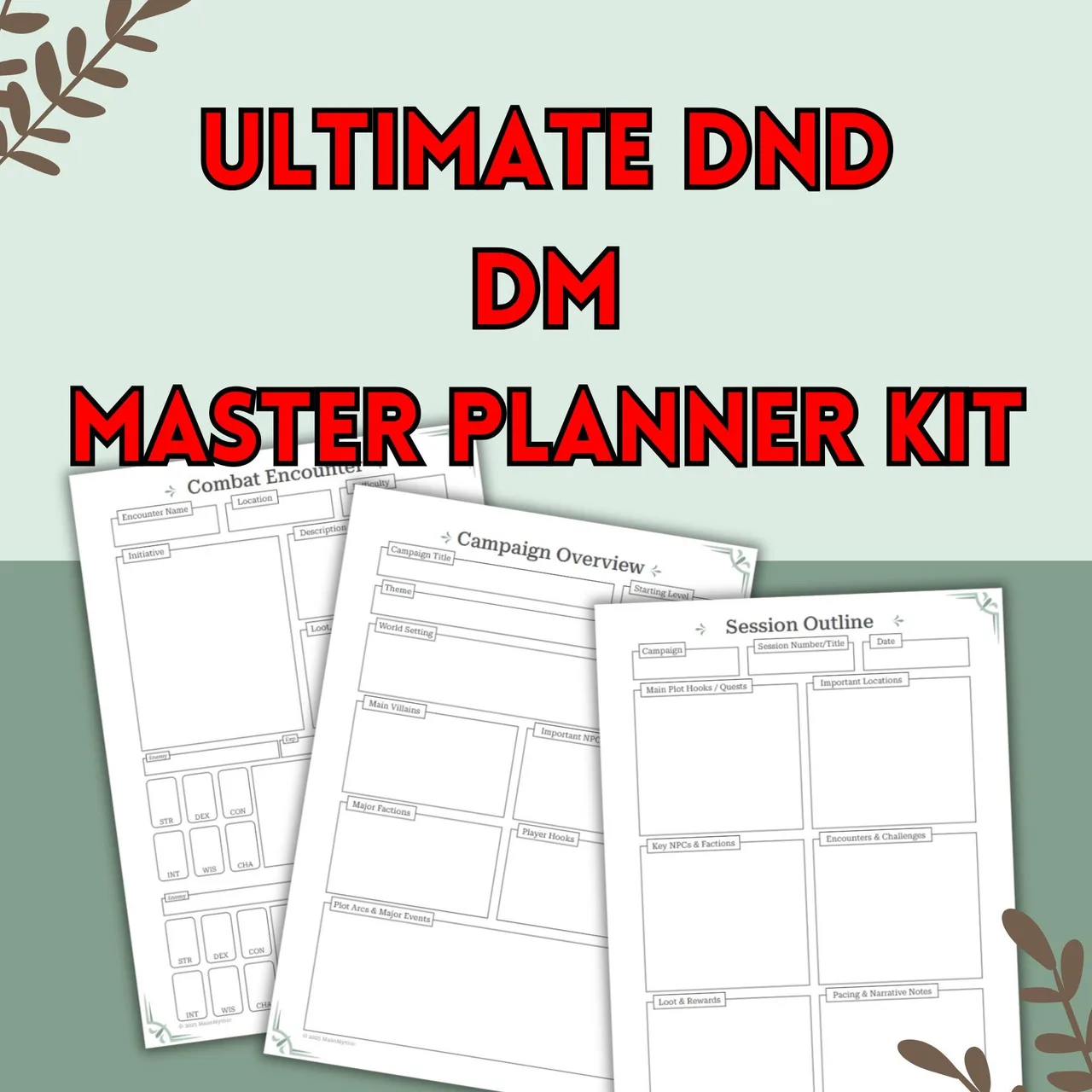
If writing and tracking all of this by hand sounds like a chore, a prep kit takes the friction out. The MakeMythic DM Planning Kit bundles spreadsheet tools for session notes, attendance, and exactly this kind of table agreement, so your expectations live in one place you and your players can return to.
Out-of-character problems need out-of-character solutions
When a player frustrates you, the tempting trap is to handle it in the fiction: drop a rock on the murderhobo, let an NPC humiliate the rules lawyer, fudge an encounter to “teach a lesson.” Resist this completely. It never works, and it usually makes things worse.
In-game punishment doesn’t address the actual problem, because the problem lives at the table, not in the story. The player rarely connects the dead character to their behaviour; they just feel singled out by the DM, which damages trust for everyone watching. Worse, it teaches the table that you’ll use your authority over the world to settle personal scores, which is the fastest way to lose a group’s confidence.
If the issue is out-of-character behaviour, the solution is an out-of-character conversation. Keep those two worlds separate. The fiction is where everyone plays; your table-management tools are private, plain, and human.
When and how to remove someone
Sometimes the conversation doesn’t take, and removal is the kind choice for everyone else. Two situations call for it. The first is a behaviour that continued through clear private conversations and a fair ultimatum: you gave real chances, and they passed. The second needs no ladder at all. Harassment, bigotry, or anything that makes another player unsafe is grounds for immediate removal, full stop. Your first duty is to the safety of the table, not to a problem player’s feelings.
When you remove someone, do it privately, briefly, and without a prosecution. You’re not there to win the argument or list every offence. A clean, kind framing works best:
“I’ve thought about this a lot, and I don’t think I can run the kind of game you’re looking for. I don’t think this table is the right fit, and I’m going to step back from having you in it.”
Then hold the line. The most common mistake is reopening a decision you’ve already made because the conversation gets uncomfortable. Be firm. If someone won’t abide by the table’s basic social contract, they’re no longer invited, and that’s a complete sentence. You can be warm about it and still not negotiate.
Removing a player is never fun, but a single person who repeatedly ignores the agreement will cost you the other three or four, who quietly stop showing up. Protecting the table is part of the job.
Run the foundation well and most of this never comes up
The DMs who rarely deal with problem players aren’t lucky. They set expectations early, write them down, and have the small conversation while it’s still small. The behaviour-first private chat is your everyday tool; the escalation ladder is your structure for the rare case it doesn’t land; removal is the kind last resort you hope never to need.
When you’re setting up the next campaign, our session 0 guide walks through the expectations that prevent most of this, the initiative tracker keeps turns moving so spotlight friction has less room to grow, and the NPC name generator keeps your prep light so you have the energy for the human side of running a table. Set the foundation well, and the hard conversations mostly take care of themselves.
Frequently asked questions
- How do you deal with a problem player in D&D?
- Treat it as a behaviour problem, not a person problem. Have a calm private conversation outside the game, name the specific behaviour and its effect, and ask for one concrete change. Out-of-character problems need out-of-character solutions, so never punish the character to fix the player.
- Should you talk to a disruptive player privately or in front of the group?
- Talk to them privately first, almost always. A private chat lets you be direct without making them defensive in front of an audience. Save the group conversation for shared issues or as a later step on the escalation ladder, because confronting one person as a group can feel like an ambush.
- What do you say to a problem player in D&D?
- Be specific and kind but firm: name the behaviour, describe its effect on the table, and ask for one change. A useful line is, 'When you talk over other players' turns, they check out, and I need everyone to get their spotlight.' Then listen, because they may not have noticed.
- When should you remove a player from your D&D game?
- Remove a player when the behaviour continues after clear private conversations, or immediately if it involves harassment, bigotry, or anything that makes others unsafe. A kind framing is, 'I don't think I can run the kind of game you're looking for.' Be firm; do not reopen a decision you have already made.
- How do you set expectations to prevent problem players?
- Set a short written social contract in session 0: tone, spotlight sharing, phones, content limits, and how you handle rules disputes. Most problem behaviour comes from mismatched expectations, so writing them down gives you something concrete to point back to instead of relitigating it mid-session.
Keep reading
From the shop
Battlemaps, spell cards, and magic item cards, ready to print.
Browse MakeMythic on Etsy →