How to Run a D&D One-Shot at a Convention
Run a D&D one-shot at a convention with confidence: pre-gen characters, tight four-hour pacing, table etiquette, safety tools, and what to pack.
Running a D&D one-shot at a convention is a different skill from running your home campaign. You have a fixed slot, usually four hours, a table of strangers who may never have met each other or you, and no second session to fix anything. The good news is that this constraint makes prep easier, not harder: you build one tight, self-contained adventure, you bring ready-made characters, and you pace it deliberately. This guide covers everything that matters for a convention one-shot, anchored to Gen Con 2026 as the example, so you can sit down at an unfamiliar table and run a session people remember.
Why a convention one-shot is its own kind of game
A home game is a marathon. A convention one-shot is a single sprint with a hard finish line. At Gen Con 2026, which runs July 30 to August 2 at the Indiana Convention Center in Indianapolis, event slots are scheduled blocks, and your table needs to start on time and end on time. That changes how you design the whole experience.
You are not building a world. You are building one memorable problem with a beginning, a middle, and a clean ending. Players signed up for a complete story in an afternoon, and the single biggest mistake new convention DMs make is bringing too much content. A campaign opener that would fill three home sessions will overflow a four-hour slot and leave the table mid-scene when the room needs to clear.
Design for less than you think. A tight one-shot with breathing room beats an ambitious one that never reaches its ending.
Build the adventure around a four-hour slot
Treat the four hours as a budget and spend it on purpose. A reliable shape looks like this:
- First 30 minutes: introductions, handing out characters, tone-setting, and the hook.
- Next ~3 hours: three or four scenes, with one or two combats and the rest split between exploration and roleplay.
- Final 30 minutes: the climax and a clean resolution.
Keep the plot to a single objective: rescue the captive, steal the artifact, hunt the monster, survive the night. One clear goal keeps a table of strangers moving in the same direction without a session 0 to align them. If you want a deeper look at how alignment normally happens before play, our complete session 0 guide explains what you’re compressing into five minutes here.
Avoid branching choices that can stall. A home group will happily debate three doors for twenty minutes. At a convention, that twenty minutes is gone, and you still have a climax to reach. Funnel the action gently and keep the spotlight rotating so no single player dominates.
Pre-generate every character before you arrive
Never make convention players build characters at the table. Build them in advance, print them, and hand them out. Pre-generated characters are the single highest-leverage prep you can do, because character creation alone can eat an hour you don’t have.
Bring one pre-gen per seat plus one or two spares. For a six-seat table, print seven or eight. Spares cover late sign-ups, swaps, and the player who grabbed the wizard but really wanted the barbarian. Cover the core roles so the party can function: a frontline fighter, a healer or support caster, a face for social scenes, and a controller or striker for damage.
Make each sheet self-contained. List the character’s spells, abilities, and key gear right on the page so nobody has to look anything up mid-fight. A few lines of personality and a one-sentence reason they’re here gives shy players an immediate handle on who they’re playing. The goal is that a stranger can pick up the sheet and play confidently within five minutes.
Set tone and safety in the first five minutes
You’re running for people you’ve never met, so don’t assume shared expectations. Spend the first few minutes saying out loud what kind of game this is: heroic or grim, serious or comedic, lethal or forgiving. Strangers need that frame more than your home group does.
Then offer a lightweight safety tool. The X-card gives anyone at the table a no-questions-asked way to pause if content lands badly, and naming lines and veils up front tells you which topics to keep off the table. This takes ninety seconds and signals that the table is a safe place to play. Conventions seat people of all ages and backgrounds together, which makes this step more important here than anywhere else.
Quick introductions close the opening: name, the character they’re playing, and one thing they’re hoping to do today. That last answer tells you how to hand each player a spotlight moment before the session ends.
Pace tightly and keep the table moving
Pacing is where convention one-shots are won or lost. Watch the clock openly and steer toward your ending. If a scene is dragging, cut to the chase. If combat is grinding, have the remaining enemies surrender or flee once the outcome is clear. Nobody at a convention wants to spend forty minutes mopping up a fight that’s already decided.
Keep initiative moving. Ask each player what they’re doing before their turn comes up so they’re ready when it does, and resolve rules disputes with a fast ruling now and a check later. A clean initiative order is the backbone of a tight combat, and a simple initiative tracker keeps a table of strangers from losing the turn order when nobody knows each other’s names yet.
This is the natural point where the gap between a smooth con table and a scrambling one shows. Having your scenes, timings, encounters, and pre-gens organised in one place is what lets you watch the room instead of shuffling notes.
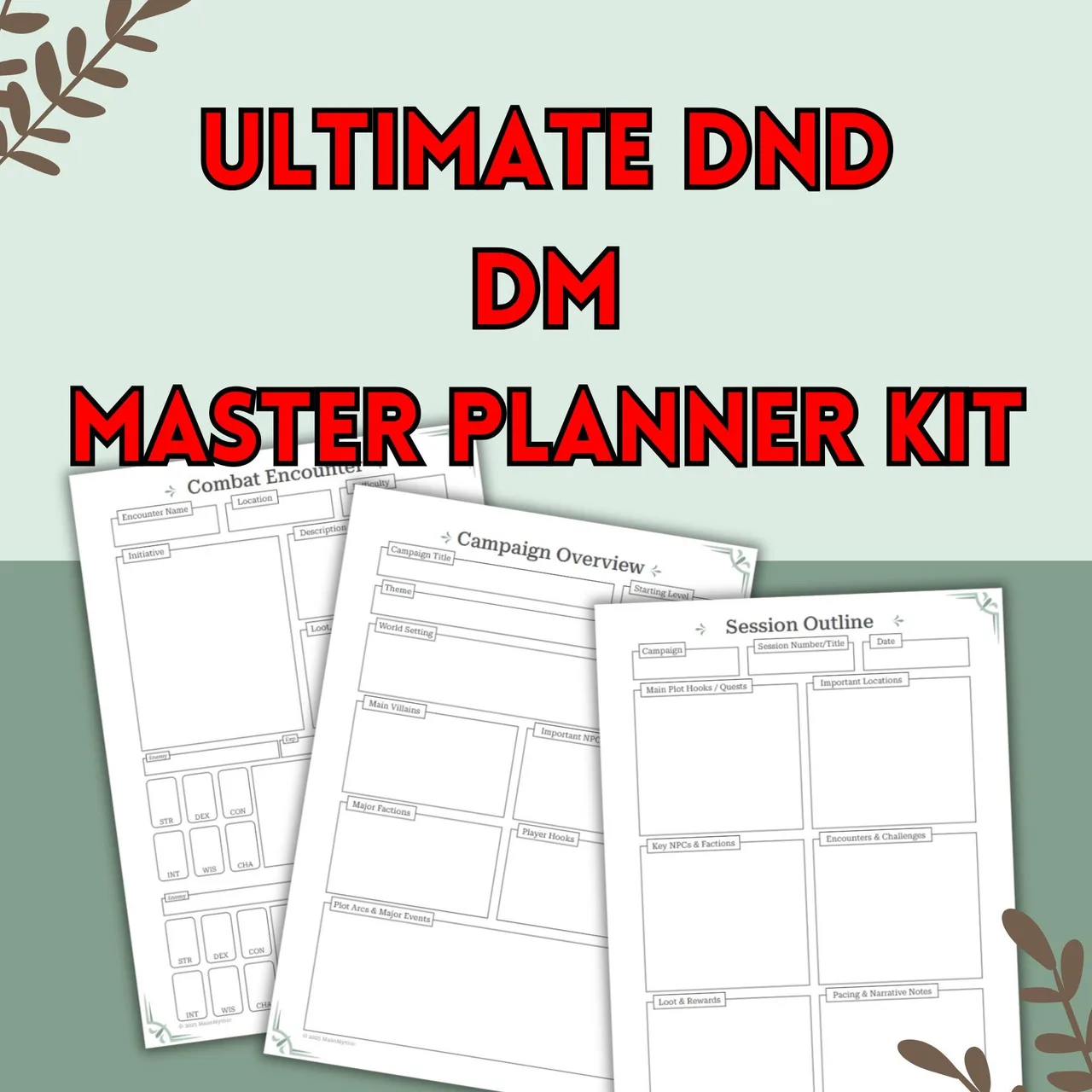
Table etiquette when you’re running for strangers
Running for strangers asks for a slightly different posture than running for friends. Treat the players as guests at your game. Be warm, learn names quickly, and make sure the quiet player gets pulled in as much as the loud one. A convention table often mixes a veteran with someone playing their first ever session, so explain rules without condescension and never make a new player feel slow.
Spread the spotlight on purpose. Give every character a scene where their build shines: a lock for the rogue, a negotiation for the bard, a big swing for the fighter. Rotating the spotlight is how you turn six strangers into a party that’s having fun together by the climax.
Hold firm on time and behaviour without being a referee. A relaxed, confident DM sets the mood for the whole table. End a few minutes early rather than overrunning into the next group’s slot.
What to pack for a convention one-shot
Print everything you can. Convention wifi is unreliable and devices die, so paper is your insurance. A solid kit:
- Pre-generated character sheets, one per seat plus spares.
- Printed maps, or a tablet with a battery pack as backup.
- Dice, plus a cup of spare dice for players who forgot theirs.
- Pencils, erasers, and a few spares.
- An initiative tracker and a quick reference for conditions.
- A short list of NPC names so you never freeze when a player talks to a guard. Our NPC name generator is worth a quick run before you travel so you’ve got a page of names ready.
For physical minis, lightweight printable paper miniatures travel far better than a box of metal figures and weigh almost nothing in a convention bag. If you want them on the table, our guide to printable paper miniatures walks through cutting and assembly. Pack a printed battlemap for each planned encounter so you’re never drawing terrain while six people wait.
Run it once and you’ll want to run it every year
A convention one-shot rewards preparation more than improvisation. Build a single tight adventure, bring pre-gens and spares, set tone and safety tools in the first five minutes, pace toward a clean ending, and pack so a dead battery never stops your table. Do that, and you’ll deliver a complete, satisfying story to a table of strangers in four hours, which is one of the most rewarding things you can do as a DM.
If horror is your flavour, our horror one-shot ideas translate especially well to convention slots, where a single dread-soaked evening lands harder than a slow-burn campaign ever could. Whatever you run, prep it once properly and you’ll be signing up to DM at next year’s con before this one’s even over.
Light enough to carry. Convention play rewards anything that fits in a bag. The 50 free print-and-fold minis weigh nothing, cost nothing, and it does not matter if a table walks off with one.
Frequently asked questions
- How long should a convention D&D one-shot be?
- Most convention slots run four hours, so design the adventure to finish comfortably inside that window with time to spare. Aim for a 30-minute setup, about three hours of play across three or four scenes, and a clean ending. Plan for less content than you think, because table introductions and rules questions eat time you can't get back.
- How many pre-generated characters should I bring?
- Bring one pre-generated character per seat plus one or two spares. For a six-player table that means seven or eight ready-made sheets. Spares cover late sign-ups, swaps, and the player who wants a different class than the first one they grabbed.
- How do I run D&D for players I have never met?
- Open with quick introductions, state the tone and content boundaries up front, and offer a safety tool like the X-card. Keep early scenes simple so everyone gets a spotlight moment fast. Treat the table as guests at your game rather than a group you already know.
- What do I need to pack to run a one-shot at a convention?
- Pack printed pre-gens, printed maps or a tablet, dice, pencils, initiative tracker, name list, and a few spare pencils and erasers. Add a battery pack if you rely on a device. Print everything you can so a dead screen never stops your table.
- What is the best D&D adventure length for a first-time con DM?
- A single, self-contained problem with one or two combats and a clear objective works best. Avoid sprawling plots or branching choices that can stall. A tight rescue, heist, or monster hunt resolves cleanly inside four hours and leaves players satisfied.
Keep reading
From the shop
Battlemaps, spell cards, and magic item cards, ready to print.
Browse MakeMythic on Etsy →