How to Speed Up D&D Combat
Speed up D&D combat with a before/during/after model: average monster damage, group initiative, minions, morale, and cutting rules-lookups. Usable tonight.
Slow combat is the most common complaint at D&D tables, and almost all of the lost time comes from a handful of fixable places. The fastest wins are on the monster side: deal average damage instead of rolling, give a pack of identical enemies one shared initiative, and decide in advance how the fight ends. The single biggest time sink, though, isn’t dice or movement — it’s rules-lookups. Every time the table stops to argue what “grappled” does or how cover works, you lose minutes and momentum. This guide gives you a before, during, and after model you can use at your next session tonight.
Where the seconds actually go
Before you fix slow combat, it helps to know where the time leaks out. In most fights, the time disappears into four buckets:
- Rules-lookups. One debate about a condition, a spell interaction, or cover can eat five minutes and kill the tension. This is the single largest sink at most tables.
- Slow turns. Players who start thinking about their turn only when it arrives. A barbarian rolling 10d6 of damage one die at a time.
- Monster bookkeeping. Rolling attack and damage for a dozen creatures, tracking a long initiative order, and recalculating after every hit.
- The mop-up. The last few rounds where the outcome is decided but you grind through chip damage on nearly-dead enemies.
The model below attacks each bucket. Some fixes happen before the session, some during the fight, and some only matter at the end.
Before the fight: design for speed
Most slow fights are built slow before anyone rolls initiative.
Use fewer monster types
It is far faster to run four ogres than two ogres, six goblins, and a war mage. Each distinct stat block is a separate set of rules, attacks, and abilities you have to hold in your head. A good ceiling is two to three different stat blocks per fight. You can still field a lot of bodies — just make most of them the same.
Pre-pick the average damage
Every monster stat block already prints its average damage. A line like “Scimitar. Melee Weapon Attack… Hit: 5 (1d6 + 2) slashing damage” is telling you to deal 5 without touching a die. The number before the parenthesis is the average, and using it removes the bulk of your dice-rolling. Highlight those numbers on your stat blocks before the session so you never stop to do the math mid-turn.
Decide the exit condition
Ask one question per encounter: how does this end before everyone is at zero hit points? Maybe the goblins flee when their boss drops. Maybe the cultists surrender when half are down. Writing that trigger on your notes means you never grind through a pointless mop-up. More on this below.
During the fight: cut the lookups first
The biggest single thing you can do mid-combat is stop looking things up.
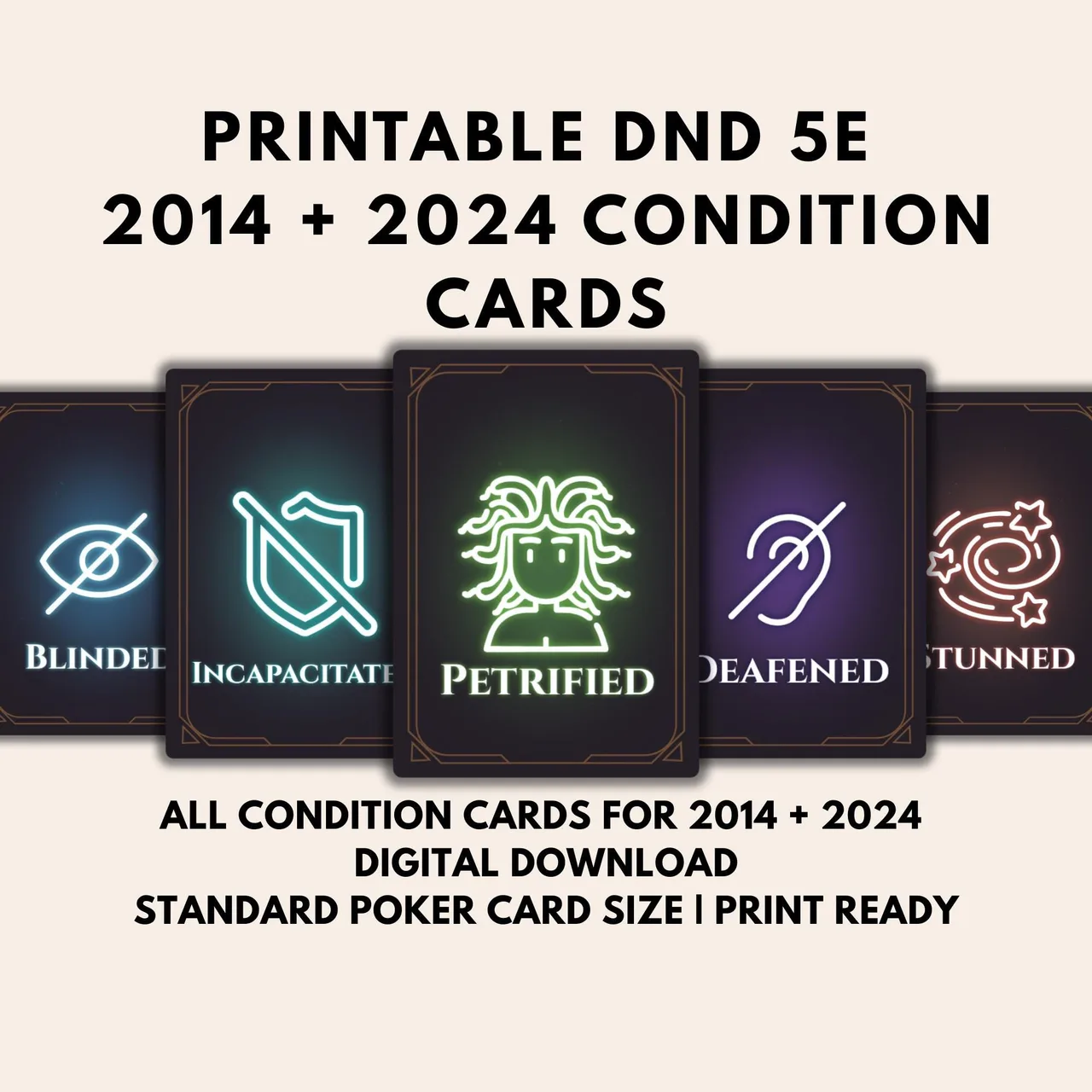
A rules-lookup is uniquely costly because it stops everyone — the action freezes while the table flips through a book or scrolls a wiki. Conditions are the worst offender, because they show up constantly and the wording matters: does frightened stop movement, does prone affect ranged attackers, what exactly does restrained do. If you want the underlying mechanics straight, our guide to how the frightened condition works breaks one of them down. But mid-fight you don’t want to read a guide — you want a card you can glance at in two seconds.
That is the honest case for a physical condition reference at the table. When the exact text of a condition is sitting face-up next to you, the debate never starts. You read it, apply it, and keep the spotlight moving.
Deal average damage
This is the easiest mid-fight win. Instead of rolling for every monster hit, deal the printed average. It removes most of your dice handling, keeps your attention on the table rather than your dice tray, and the result is statistically fair — across a whole fight the average and the rolls land in the same place. It matters most when you’re running a lot of creatures, where rolling damage for each one would crawl.
Run identical monsters as a group
Give a batch of identical enemies one shared initiative instead of rolling for each. Roll once for the six goblins, drop them all on that count, and resolve their whole turn in a single pass. This shrinks your initiative order, cuts the back-and-forth of jumping between scattered monster turns, and makes a swarm feel like a coordinated threat instead of a bookkeeping chore. A clean initiative tracker makes a grouped order even easier to run, and a spell slot tracker keeps your caster enemies’ resources straight without scribbling.
Keep players’ turns moving
Players are half the clock. Two habits help: ask everyone to plan their turn before it arrives, and if a player has decided their attack but is still counting damage dice, move to the next person while they total it up. You can resolve the result a beat later. Revealing monster armour class once a player has hit also saves the “does a 17 hit?” loop every round.
Minions: the swarm without the slog
When you want a horde of enemies but not a math marathon, run them as minions. The popular house rule, drawn from 4th edition, is simple: a minion has effectively one hit point and drops the moment it takes any damage from an attack. You can still give it a meaningful attack so it threatens the party, but it never survives long enough to bog the fight down.
Minions let you put twenty kobolds on the map and have them feel dangerous in numbers while resolving in seconds — a hit is a kill, no tracking required. Pair them with one real stat block for the leader, run the leader properly, and you get the cinematic “wave of enemies” fight without the bookkeeping. For the visual side of fielding that many bodies, our notes on how to make D&D tokens and the free token maker help you produce a swarm of markers fast.
After the threshold: end fights early with morale
Most fights are decided well before the last enemy dies. The rounds after that point are the mop-up, and they are pure dead time. Morale fixes this.
Morale isn’t a printed condition — it’s a DM-facing procedure. The 2014 Dungeon Master’s Guide offers an optional morale rule on page 273, and the common table version is even simpler: monsters check their nerve when their leader falls, or when half their number is dead. Creatures that fail flee, scatter, or surrender. A five-round fight ends in three, and you skip chasing a wounded goblin around the map.
The key is that not every creature fights to the death. Mindless undead and fanatics do. Hungry beasts, bandits, and conscripts very much do not — they run the moment the fight turns against them. Deciding each group’s breaking point in advance turns the boring tail of a fight into a tense, characterful moment: do the players let the survivors flee, or chase them down? Either way, the slog is gone.
A combat-speed checklist
Run this list and most slow fights tighten up immediately:
- Before: limit each fight to two or three monster stat blocks.
- Before: highlight average damage on your stat blocks.
- Before: write down how this fight ends (flee, surrender, leader drops).
- During: keep a condition reference face-up to kill rules-lookups.
- During: deal average damage instead of rolling.
- During: give identical monsters one shared initiative.
- During: use minions for hordes — one hit, one kill.
- During: move on while players total damage; reveal AC after a hit.
- After: call a morale check at the half-down or leader-drop point.
For more tools that cut prep and table time, see our roundup of the best free D&D DM tools, and if your fights also feel unfair rather than just slow, our guide to building balanced D&D encounters tackles the design side. A tidy map helps too — running the fight on a clean grid overlay or a shared tabletop display means less time squinting at squares and more time playing.
The short version
Speeding up D&D combat is mostly about deleting the slow parts rather than rushing the fun ones. Cut rules-lookups with a reference at the table, deal average monster damage, group identical enemies under one initiative, lean on minions for hordes, and let morale end fights before the mop-up. None of it costs you tension or drama — it just hands the saved minutes back to the moments that matter.
Test the biggest fix for free. Laying stat blocks out instead of flipping pages is the single largest speed gain available. The 20 free monster cards let you try it for one session before buying a full set.
Frequently asked questions
- How do I speed up D&D combat?
- Use average monster damage instead of rolling, give groups of identical monsters one shared initiative, and pre-plan how each fight ends so you're not mopping up at single digits. The single biggest time saver is cutting rules-lookups: keep a condition and rules reference at the table so a tense moment never stalls for five minutes.
- Should I roll monster damage or use the average?
- Use the average for most fights. Every monster stat block prints an average damage number before the dice in parentheses, like '7 (2d6) slashing'. Just deal that number. It removes most of your dice-rolling, keeps the spotlight on players, and the math evens out across a fight anyway.
- What is group initiative in D&D?
- Group initiative means rolling one initiative result for a whole batch of identical monsters instead of one per creature. Roll once for the six goblins and move them as a unit on that count. It shrinks the initiative order, cuts bookkeeping, and lets you resolve a swarm of enemies in a single, fast pass.
- Do D&D 2024 rules include morale?
- Morale is an optional DM-facing procedure, not a printed condition. The 2014 Dungeon Master's Guide suggests a morale check on page 273, and many DMs have monsters flee or surrender once their leader falls or half their number is down. It ends fights early and skips the tedious mop-up of chasing nearly-dead enemies.
- Why does D&D combat take so long?
- The biggest time sinks are rules-lookups, slow player turns, and over-stuffed encounters with too many different monsters. A single rules debate can cost five minutes. Cut lookups with a reference at the table, encourage players to plan their turn before it starts, and limit each fight to two or three monster stat blocks.
Keep reading
From the shop
Battlemaps, spell cards, and magic item cards, ready to print.
Browse MakeMythic on Etsy →