The best low-CR D&D monsters for early encounters
The most useful low-CR monsters for D&D 5e levels 1–4: goblins, kobolds, wolves and more, with why each works and how to combine them into balanced early fights.
The first few levels of D&D are where players learn how combat actually works, and the monsters you throw at them do the teaching. The right low-CR creature turns a flat “roll to hit” slog into a lesson in positioning, focus fire and cover. Here are the ones worth reaching for at levels 1–4, and why each earns its place.
The essential early threats
Goblins (CR 1/4). The definitive starter monster. Their Nimble Escape lets them dart in and out of cover, so a goblin ambush teaches players about line of sight, ranged attacks and chasing a mobile enemy. Nearly every published starter adventure opens with them for good reason.
Kobolds (CR 1/8). Individually feeble, but Pack Tactics means they get advantage whenever an ally is adjacent to the target. A swarm of kobolds teaches players fast that ignoring the little guys is a mistake, and they’re a cheap way to add pressure to a bigger fight.
Wolves (CR 1/4). Also Pack Tactics, plus a knockdown on a hit. A wolf pack is the classic wilderness encounter and a clean lesson in flanking and being surrounded. Pair them with a hunter or a bandit leader for a roadside ambush.
Bandits and cultists (CR 1/8). Humanoid threats matter because they can talk, surrender and flee, which dungeon vermin can’t. A bandit shakedown or a cultist ritual gives players a fight with a social dimension and consequences.
Undead and vermin for dungeons
Skeletons and zombies (CR 1/4). The bread and butter of any crypt. Skeletons are fragile but hit reliably; zombies are the opposite, shrugging off blows with Undead Fortitude and grinding players down. Running them together contrasts glass-cannon versus damage-sponge in one fight.
Giant spiders (CR 1), giant rats and rat swarms. Web restraint, poison and swarm mechanics add status effects to the early game. A giant spider lurking above a corridor is a great “look up” moment.
Stepping up: CR 1/2 to 2
Once the party finds its feet, the hobgoblin, bugbear, orc and ogre give you tougher single threats and squad leaders. A bugbear with a pack of goblins, or an ogre backed by kobolds, is the classic “boss plus minions” shape that makes an encounter feel designed rather than random. Browse the full lists by CR 1/4, CR 1/2 and CR 1 to pick your roster.
Build by budget, not headcount
The one rule that keeps early fights fair: use the XP budget and remember the encounter multiplier. Several weak monsters are far deadlier than their raw XP suggests, because more bodies means more attacks each round. Four goblins look trivial on paper and can drop a level 1 character in a round. Our free encounter builder applies the DMG thresholds and multipliers for you, and how to build balanced encounters walks through the maths.
Run them without the page-flipping
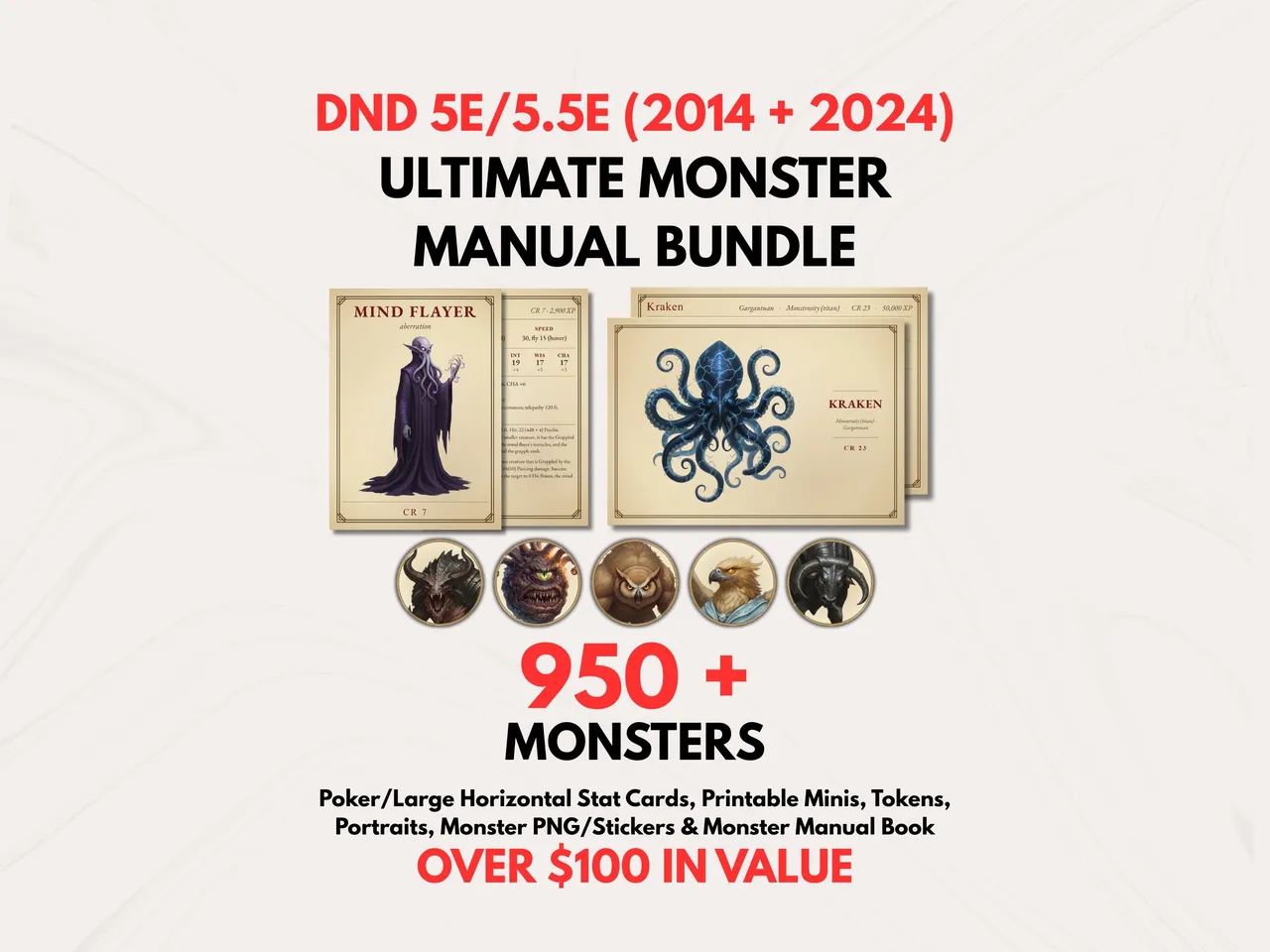
The friction in early encounters isn’t the monsters, it’s looking them up. When three creature types are on the table, thumbing through a book kills the pace. The Monster Cards bundle ($88 $26.40) gives you every SRD creature as a printable stat card with tokens and standees, so you deal out the goblins, place the tokens, and keep the fight moving. Pair it with a battlemap and your first dungeon runs itself.
Free cards for the early tier. The 20 free monster cards include several of the low-CR creatures covered here, with matching tokens for the map. It is a complete first dungeon’s worth of reference at no cost.
Frequently asked questions
- What are good low-CR monsters for a level 1 party?
- The classics earn their reputation: goblins (CR 1/4) for ranged tactics, kobolds (CR 1/8) for pack tactics, wolves (CR 1/4) for flanking, and bandits (CR 1/8) for human threats. Each teaches a different tactical lesson while staying beatable for four level 1 characters. Combine two or three types for a memorable fight.
- How many low-CR monsters make a balanced encounter?
- Use the XP budget, not a headcount, because multiple monsters get an encounter multiplier. Four CR 1/4 goblins (200 raw XP) become 400 adjusted XP, which is already a hard-to-deadly fight for a level 1 party of four. A free encounter builder does this maths for you so you don't accidentally TPK the table.
- What's the difference between CR 1/8, 1/4 and 1/2 monsters?
- They're the lowest rungs of the challenge ladder: CR 1/8 (25 XP) creatures like kobolds are minions, CR 1/4 (50 XP) like goblins are standard early threats, and CR 1/2 (100 XP) creatures start to hurt. Mixing rungs, a few CR 1/4 fighters plus a CR 1/2 leader, makes a fight feel structured rather than flat.
- Where can I get stat cards for these monsters?
- MakeMythic on Etsy sells a Monster Cards bundle with printable stat cards, tokens and standees for the 5e creatures, so you can deal out the monsters for an encounter instead of flipping through a book mid-fight.
Keep reading
From the shop
Battlemaps, spell cards, and magic item cards, ready to print.
Browse MakeMythic on Etsy →