D&D 2024 vs 2014: which ruleset should you run?
Two years on from the 2024 rules, an honest comparison for DMs — what actually changed, what it costs to switch mid-campaign, and when staying on 2014 is right.
Two years on, the “which ruleset” question has settled into something more practical than the arguments that surrounded the launch. Both rulesets work. Both are in active use. The interesting question for a DM is not which is better but what switching actually costs, and whether the things that changed matter to your table.
What actually changed
The 2024 revision is not a clean break — it is deliberately compatible with 2014 material, which is why “5.5e” stuck as a nickname. The substantive changes cluster in a few places.
Weapon mastery. Every weapon now carries a mastery property, and classes with the feature get to use them. This is the single biggest change to how martial characters play, because it gives a fighter a decision every round rather than a repeated attack roll. Our weapon mastery explainer covers each property.
Backgrounds grant an origin feat. Background stopped being flavour and became a real mechanical choice made during character creation.
Exhaustion is cumulative. The six-tier table of specific penalties was replaced by a simpler stacking penalty to d20 tests plus reduced speed. Far easier to run, and considerably kinder at low levels — relevant if you run survival content, as our cold weather rules guide covers.
Hiding and stealth were tightened. The 2014 rules left a great deal to DM adjudication; the 2024 version is more prescriptive. See the 2024 hiding and stealth rules.
Spell lists and specific spells. Several spells moved between lists or were rewritten. A handful of well-known ones changed enough to alter builds — conjure minor elementals being the obvious example.
Conditions were clarified. Mostly wording rather than function, but the wording matters at the table. Our conditions cheat sheet covers the current versions.
What did not change
Worth stating plainly, because it is most of the game.
The core loop is identical. d20 plus modifier against a DC. Six ability scores. Advantage and disadvantage. Proficiency bonus scaling. The action economy. Hit dice and short rests. Concentration. Most monster stat blocks.
That is why published adventures port with almost no work. A campaign like Curse of Strahd or Rime of the Frostmaiden is locations, NPCs and encounters — none of which care much which player-side ruleset you are on.
The real cost of switching
The cost is not learning the rules. It is inconsistency at the table.
If half your players rebuild and half do not, you now have two exhaustion systems, two stealth adjudications, and two sets of expectations about what a weapon does. Every ruling has to be qualified. That is where the friction lives, and it is entirely avoidable.
So: switch everyone at once, at a boundary, or do not switch.
Good boundaries: the start of a new campaign. The end of an arc. A level-up where everyone is rebuilding anyway.
Bad boundaries: mid-dungeon. Mid-arc. When one player wants a new subclass and nobody else does.
When to stay on 2014
There are good reasons, and “we do not want to buy books” is one of them.
- Your campaign is deep in. A level 12 party three years into a story has no reason to absorb a rules change. Finish it.
- Your table likes 2014 martials. Some groups genuinely prefer simpler fighters. Weapon mastery adds decisions, and not everyone wants more decisions.
- Your material is 2014. If you own a shelf of 2014 books and a large library of 2014-formatted spell cards and reference material, that has real value.
- You are mid-way through a published adventure written for it. No conversion needed at all if you simply stay.
When to switch
- You are starting a new campaign. Easiest possible moment. Take it.
- You want the new books. Everything current — Ravenloft: The Horrors Within, Arcana Unleashed, the World of Warcraft crossover — is written for 2024. This argument gets stronger every release cycle.
- Your martial players are bored. Weapon mastery is a genuine fix for the “I attack again” problem.
- You run a lot of new players. The 2024 books are better organised and better at teaching, and cumulative exhaustion is much easier to explain.
Running both, if you must
Some tables end up straddling — 2024 players, 2014 material, or the reverse. It works if you make three decisions in advance and write them down:
- Which exhaustion system is in force. Pick one for everyone.
- Which hiding rules apply. Pick one and rule consistently.
- Which version of a rewritten spell is canon when both exist at the table.
Almost every “our table is confused” story traces back to one of these three being undecided.
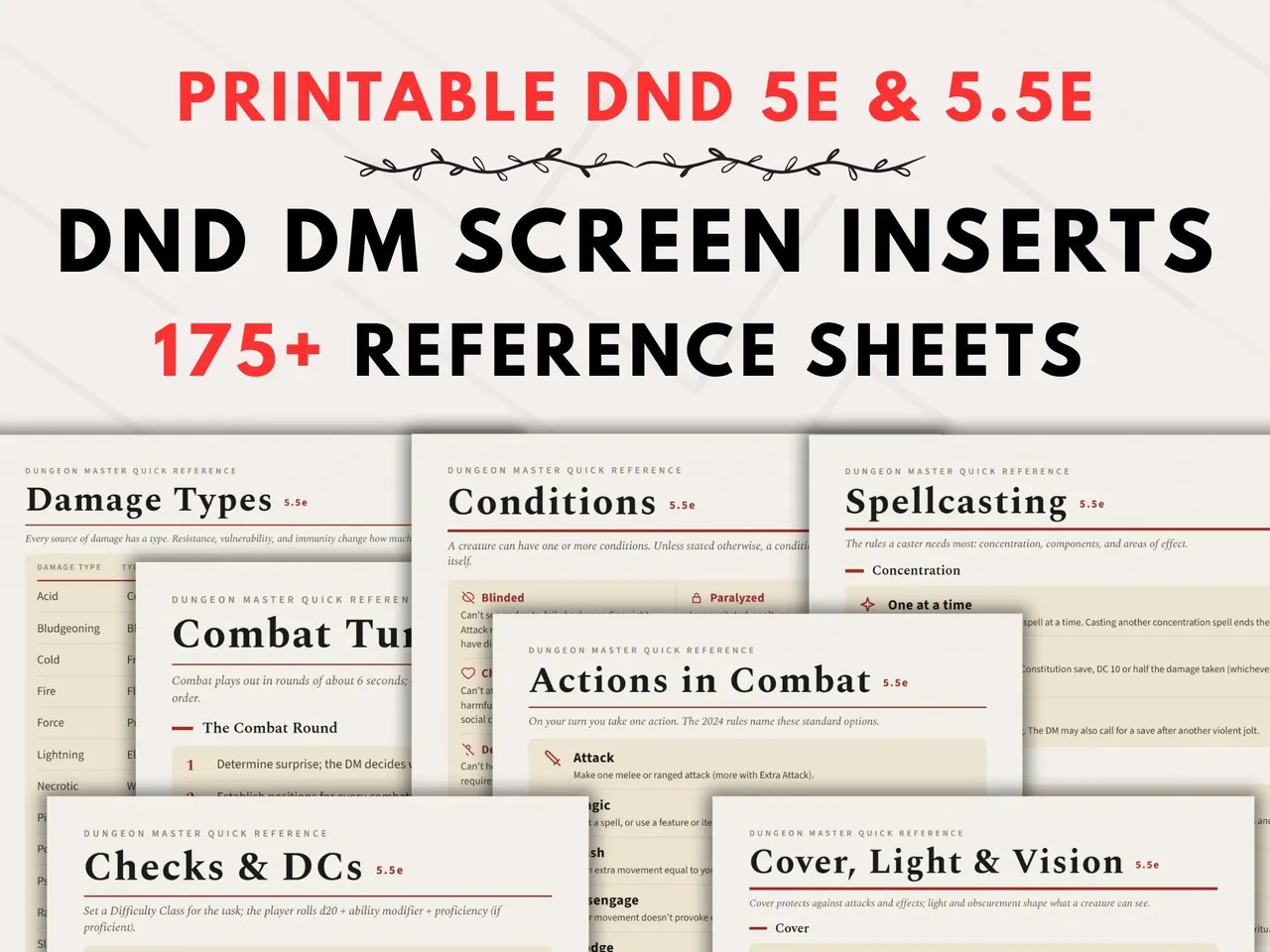
Reference material covering both rulesets is genuinely useful during a transition, because the questions that come up are exactly the ones where the two differ.
The short answer
Starting fresh? Run 2024. It is where the books are going and the martial classes are more fun to play.
Mid-campaign? Finish it on 2014. Nothing in the revision is worth interrupting a story you are two years into.
Somewhere in between? Switch at the next arc break, rebuild everyone at once, and write down your rulings on exhaustion, stealth and rewritten spells before session one.
Either way, the game is the same game. The revision is a refinement, not a replacement, and any table arguing about it for more than one evening is arguing about the wrong thing.
Frequently asked questions
- Is D&D 2024 a new edition?
- It is backwards compatible with 2014 material rather than a clean break, which is why people call it 5.5e as often as they call it a new edition. Monsters, adventures and most subclasses carry across with little or no conversion, but the player-facing rules changed enough that mixing both at one table causes friction.
- What are the biggest changes in the 2024 rules?
- Weapon mastery properties on every weapon, backgrounds granting an origin feat, a simplified cumulative exhaustion system, reworked spell lists and several rewritten spells, changes to hiding and stealth, and a general rebalancing that makes martial characters more active in combat.
- Can I use 2014 adventures with the 2024 rules?
- Yes, with very little work. Published adventures are mostly locations, NPCs and encounters, and monster stat blocks are close enough that most run unchanged. The main adjustments are around spells that were rewritten and the occasional DC that assumed the older skill rules.
- Should I switch mid-campaign?
- Usually not mid-arc. If you do switch, do it at a natural break and let everyone rebuild at the same time. The worst outcome is half the table on new rules and half on old, because DCs, exhaustion and stealth then behave inconsistently.
- Are 2014 subclasses still usable in 2024?
- Broadly yes, though some feel underpowered next to their updated versions because the 2024 baseline for martial characters is higher. Check subclass features that interact with rules that changed, particularly anything referencing hiding, exhaustion or specific spells.
- Which ruleset are new books written for?
- New releases are written for the 2024 rules. If you want to use current books without conversion work, that is the practical argument for switching, and it grows every year.
Keep reading
From the shop
Battlemaps, spell cards, and magic item cards, ready to print.
Browse MakeMythic on Etsy →